
📑 Table of Contents ▶
Best Pavlova Recipe
I’m Della Lucia, and HealthyDinnerMeals was created from my belief that food should nourish both the body and the moments we share. My fondest memories come from simple homemade meals — not perfection, just comfort, connection, and care. Here, healthy eating stays approachable and satisfying, with recipes that fit real life: quick, flavorful, and balanced. Whether you’re cooking for yourself or loved ones, I hope these meals help you feel confident in the kitchen and inspired to enjoy every moment around the table.
A pavlova always holds a special place in my heart. I remember the first time I stood in the kitchen, excited to whip up this delight. The anticipation of a delicate crisp outer shell, with soft, marshmallow-like insides made my taste buds tingle. As I whipped those egg whites, I knew I was in for a treat.
The beauty of a pavlova lies in its simplicity. Just a few ingredients create a spectacular dessert perfect for any occasion. The thrill of watching that meringue bake slowly and the aroma that fills the kitchen is second to none. With fresh cream and berries, each slice becomes an unforgettable experience, transforming moments into memories.
Join me as we dive into the best pavlova recipe. It’s a fantastic addition to any gathering, and I promise you’ll find joy in making and sharing this lovely dessert.
Best Pavlova Recipe
Fundamentals
Understanding the core components of pavlova will prepare you for making this classic dessert. The base consists of egg whites, granulated sugar, and a few other essential ingredients. Together, they create an airy meringue that forms the foundation of this delightful treat. The crispy exterior provides a stunning contrast to the creamy filling and the burst of fresh flavors from the toppings.
Make sure to use fresh egg whites at room temperature. This step allows for maximum volume and stability when whisking. The sugar acts as a structure, giving the meringue its iconic texture. Cornstarch ensures the meringue has a lovely softness on the inside. The vinegar helps stabilize the egg whites, ensuring that your pavlova stands tall while baking.
Preparation/Setup
Prepping for your pavlova starts with simple yet important steps. A clean mixing bowl and whisk are crucial to get those egg whites to maximum volume. Use vinegar to wipe down your utensils, which eliminates any traces of grease. Next, gather all your ingredients, making the process smooth and enjoyable.
Set the oven temperature accurately. The slow baking process is vital for achieving perfect results. Preheat your oven to 300°F (150°C). This gentle heat ensures the pavlova bakes evenly without browning too quickly. Plan to bake the pavlova for an hour or so, giving yourself time to prepare the delightful toppings.
Ingredients
Here’s what you need for the best pavlova recipe:
- 6 egg whites (at room temperature)
- 1 1/2 cups granulated/caster sugar
- Pinch of salt
- 3 tsp cornflour/cornstarch
- 1 tsp white vinegar
- 1 tsp vanilla essence
- 1 cup cream (for whipping)
- Fresh strawberries or other berries (for serving)
These simple ingredients come together in harmony, resulting in a dessert that speaks volumes in taste and presentation.
Directions
- Preheat the oven to 300°F (150°C).
- Wipe down your mixing bowl and whisk with vinegar. Discard the paper towel.
- In the prepared bowl, whisk the egg whites and a pinch of salt until stiff peaks form.
- Gradually add sugar, about 1/4 cup at a time, whisking after each addition until the sugar dissolves.
- Whisk on high for three minutes until thick and glossy.
- Combine cornstarch, vinegar, and vanilla essence in a small bowl, then add to the meringue mixture and whisk until just combined.
- Line a baking tray with parchment paper and scoop the meringue onto it, forming a circle.
- Lower the oven temperature to 250°F (120°C) and bake for 1 to 1 hour and 15 minutes until lightly browned.
- Leave the pavlova in the oven to cool for three hours.
Creating the Perfect Pavlova
Technique
Making a pavlova requires a delicate touch and care. Whisking the egg whites is one of the most critical steps. Focus on achieving stiff peaks, ensuring that the egg whites incorporate air without any liquid. This process creates the airy texture pavlova is known for.
Take your time adding the sugar. Steadily incorporating it allows for better dissolution. If you add it too quickly, the sugar might not fully blend, impacting the texture and sweetness. Use a high-speed setting on your mixer for about three minutes after adding the sugar to achieve that thick and glossy consistency.
Tips/Tricks
Use room temperature egg whites. If your eggs are cold, the meringue might not rise as high. You can separate egg whites from yolks ahead of time, allowing them to warm up before starting.
When whipping the cream for serving, avoid over-whipping. You want a soft dollop that complements the sturdiness of the pavlova without overpowering it. A simple sprinkle of powdered sugar or a splash of vanilla will elevate the flavor without complicating the process.
Don’t hesitate to experiment with flavorings if desired. Maybe try a hint of almond extract or a splash of citrus. Keeping the classic approach works beautifully, but creativity can often lead to delightful surprises.
Mastering the Art of Pavlova
Perfecting Results
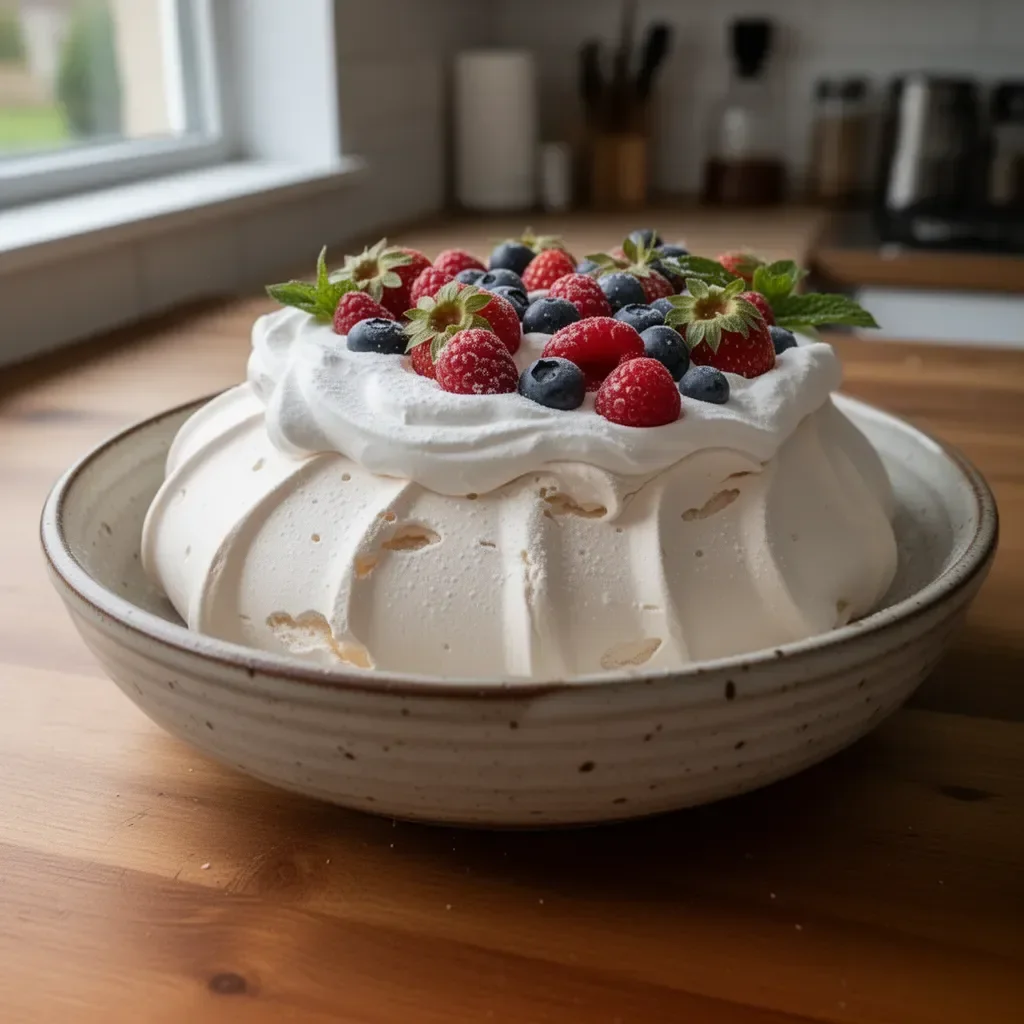
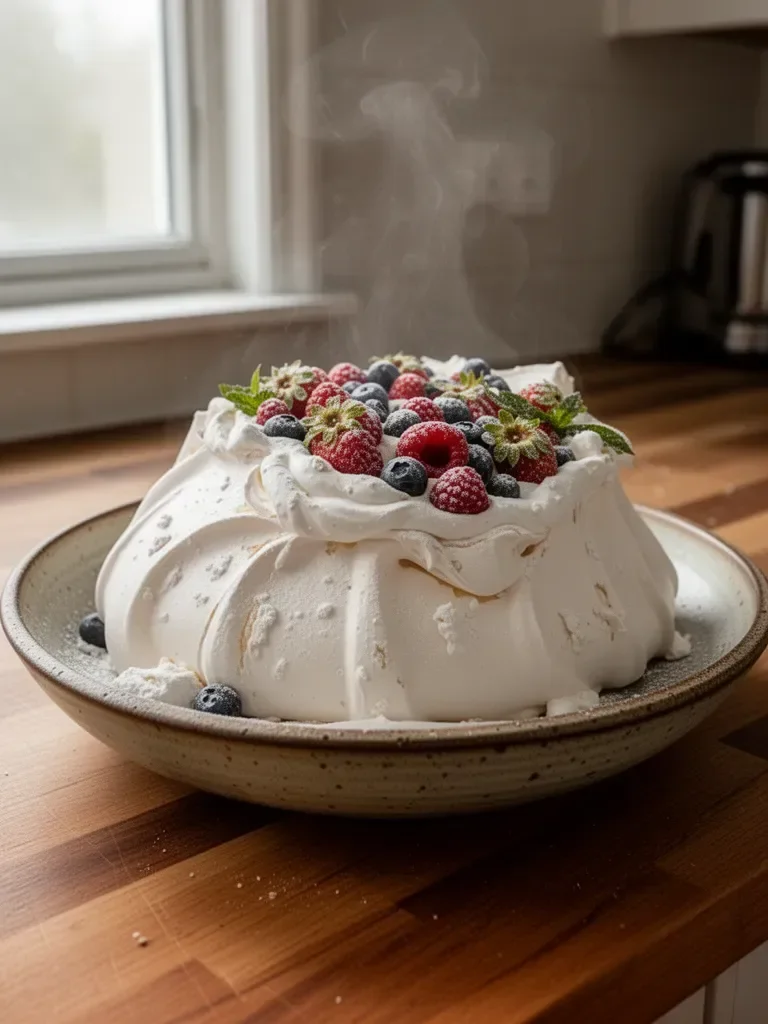
A successful pavlova should have a crisp outer shell and a soft, fluffy interior. The exterior may take on a delicate light golden color, while the insides should remain pure white and airy. To achieve this, maintain a stable oven temperature, avoiding drastic changes during baking.
Baking the pavlova low and slow produces the best results. An hour to an hour and fifteen minutes should do the trick, but every oven is unique. Consider keeping an eye on your pavlova towards the end to ensure it doesn’t over-brown.
Cooling the pavlova in the oven is essential. This process allows the meringue to finish cooking gently without becoming rubbery. After it cools completely, it’s ready to top with a luscious layer of whipped cream and your favorite berries.
Troubleshooting/Variations
Sometimes, even the most experienced bakers face challenges when making pavlova. If it collapses or doesn’t hold its shape, it could mean the egg whites were not whisked adequately. Ensure they reach stiff peaks for optimal stability.
If you notice cracks in your pavlova, this can often occur due to an overly rapid cooling process. Avoid sudden temperature changes, as this alters the delicate structure of the meringue. Should you encounter this, consider a decorative touch with fresh cream and berries to mask any imperfections.
For variations, mix in your favorite flavors or toppings. While fresh strawberries are traditional, consider blueberries, raspberries, or kiwi for added brightness. Whipped coconut cream offers a delightful alternative to regular cream, providing a twist on classic toppings.
Presenting Your Pavlova
Serving/Presentation
The beauty of pavlova lies in its stunning presentation. Aim to top your meringue with a generous spread of whipped cream, allowing it to cascade over the sides. Arrange the berries artfully, showcasing their vivid colors. Optional mint leaves can enhance the aesthetic, adding a touch of greenery that pops against the creamy whites and vibrant fruits.
Serve immediately after assembling to ensure the pavlova maintains its crisp texture. Alternatively, let your guests top their meringue individually to allow for personalization. Each guest will appreciate the opportunity to assemble their dessert, creating a bit of excitement around the table.
Pairings/Storage
While enjoying pavlova, think about complementary flavors. Use a fruit coulis or drizzle of honey for an extra touch of sweetness. Consider pairing it with a light, refreshing beverage to balance the sweetness of the dessert.
Store any leftovers in an airtight container, placing it in the fridge. While the pavlova will gradually lose its crispiness, enjoying it the next day still brings pleasure. The flavors meld beautifully, making this a delightful treat even after the initial serving.
Making the best pavlova brings joy to both the baker and the guests. With a well-followed recipe, anyone can indulge in this airy delight. Enjoy the process and bond over the delightful treat it creates.
Print
Best Pavlova Recipe
- Prep Time: 15 minutes
- Cook Time: 75 minutes
- Total Time: 90 minutes
- Yield: 8 servings
- Category: Dessert
- Method: Baking
- Cuisine: Australian
- Diet: Vegetarian
Description
A delightful pavlova with a crisp outer shell and soft marshmallow-like insides, topped with whipped cream and fresh berries.
Ingredients
- 6 egg whites (at room temperature)
- 1 1/2 cups granulated sugar
- Pinch of salt
- 3 tsp cornstarch
- 1 tsp white vinegar
- 1 tsp vanilla essence
- 1 cup cream (for whipping)
- Fresh strawberries or other berries (for serving)
Instructions
- Preheat the oven to 300°F (150°C).
- Wipe down your mixing bowl and whisk with vinegar. Discard the paper towel.
- In the prepared bowl, whisk the egg whites and a pinch of salt until stiff peaks form.
- Gradually add sugar, about 1/4 cup at a time, whisking after each addition until the sugar dissolves.
- Whisk on high for three minutes until thick and glossy.
- Combine cornstarch, vinegar, and vanilla essence in a small bowl, then add to the meringue mixture and whisk until just combined.
- Line a baking tray with parchment paper and scoop the meringue onto it, forming a circle.
- Lower the oven temperature to 250°F (120°C) and bake for 1 to 1 hour and 15 minutes until lightly browned.
- Leave the pavlova in the oven to cool for three hours.
Notes
For best results, ensure egg whites are at room temperature and avoid rapid cooling to prevent cracking.