
📑 Table of Contents ▶
- Authentic Japanese Onion Soup: Fundamentals
- Fundamentals
- Preparation/setup
- Directions
- Exploring Techniques in Authentic Japanese Onion Soup
- Technique
- Tips/tricks
- Perfecting Results with Authentic Japanese Onion Soup
- Perfecting results
- Troubleshooting/variations
- Serving and Storing Authentic Japanese Onion Soup
- Serving/presentation
- Pairings/storage
- Conclusion
Authentic Japanese Onion Soup
I’m Della Lucia, and HealthyDinnerMeals was created from my belief that food should nourish both the body and the moments we share. My fondest memories come from simple homemade meals — not perfection, just comfort, connection, and care. Here, healthy eating stays approachable and satisfying, with recipes that fit real life: quick, flavorful, and balanced. Whether you’re cooking for yourself or loved ones, I hope these meals help you feel confident in the kitchen and inspired to enjoy every moment around the table.
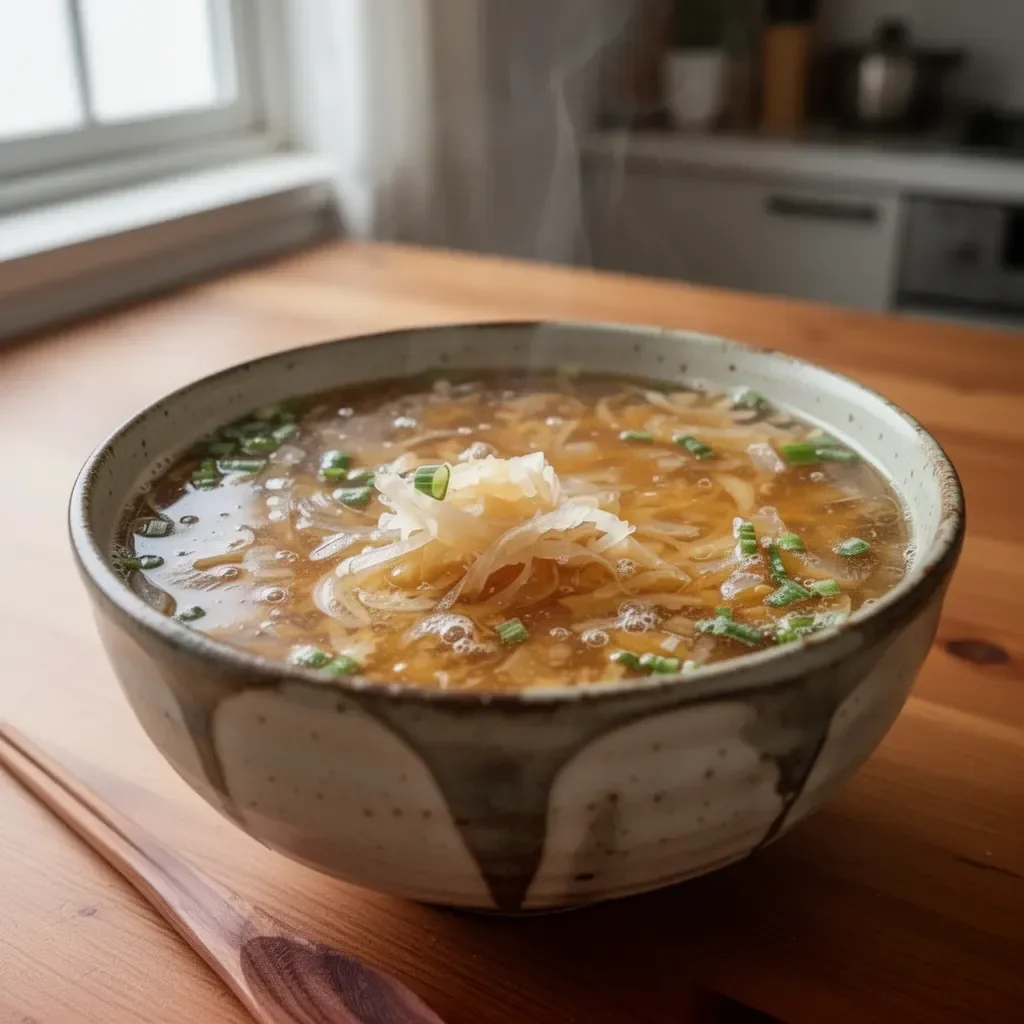
Authentic Japanese onion soup embodies simplicity and warmth. The comforting aroma of caramelized onions fills the kitchen, evoking memories of cozy dinners. This dish, so deeply rooted in Japanese cuisine, highlights the natural sweetness of onions against the backdrop of umami-rich dashi broth.
A bowl of this soup serves as a wonderful introduction to Japanese flavors, offering a delicate yet robust taste. The balance of soy sauce and miso adds depth while maintaining the dish’s light character.
As you dive into this recipe, you’ll discover how easy it is to create a comforting bowl of authentic Japanese onion soup. It invites friends and family to gather around the table, encouraging connection and conversation.
Authentic Japanese Onion Soup: Fundamentals
Fundamentals
Authentic Japanese onion soup focuses on a few key ingredients: onions, dashi broth, soy sauce, and miso paste. This simplicity allows the flavors to shine through, showcasing the onions’ sweetness. Mastering this dish requires understanding how these elements interact to create harmony in flavor.
Preparation/setup
To prepare this soup, start by gathering your ingredients. Make sure you have two large onions, dashi broth, soy sauce, and miso paste on hand. A sharp knife makes slicing the onions easier. Sautéing these onions until caramelized brings out their natural sweetness. Once your ingredients are ready, you can quickly assemble the soup without stress.
Ingredients
- 2 large onions, thinly sliced
- 4 cups dashi broth
- 2 tablespoons soy sauce
- 1 tablespoon miso paste
- Salt to taste
- Chopped green onions for garnish
Directions
- In a pot over medium heat, add the sliced onions and sauté until they are soft and caramelized.
- Pour in the dashi broth and bring to a simmer.
- Stir in the soy sauce and miso paste, mixing until well combined.
- Season with salt to taste.
- Serve hot, garnished with chopped green onions.
Exploring Techniques in Authentic Japanese Onion Soup
Technique
The technique lies mainly in the caramelization of the onions. Start with medium heat and allow the onions to cook slowly. The goal is to unlock their sweetness without burning them. Stir occasionally to ensure even cooking. This process enhances the overall flavor, creating a beautiful base for your soup.
Tips/tricks
Don’t rush the caramelization process. Patience pays off as the onions transform from sharp to sweet. Experimenting with the amount of soy sauce and miso will help you tailor the flavor to your preference. For a deeper umami profile, consider adding a touch more miso or a splash of soy sauce.
Perfecting Results with Authentic Japanese Onion Soup
Perfecting results
Taste the soup as it simmers. Adjust the seasoning with salt and soy sauce until it meets your desired flavor profile. A final sprinkle of green onions adds freshness and a pop of color, elevating the dish visually as well as flavor-wise.
Troubleshooting/variations
If the soup tastes too salty, add a bit of water or additional dashi broth to balance the flavors. As for variations, consider adding other vegetables like mushrooms or spinach. They complement the soup while adding even more nutritional value.
Serving and Storing Authentic Japanese Onion Soup
Serving/presentation
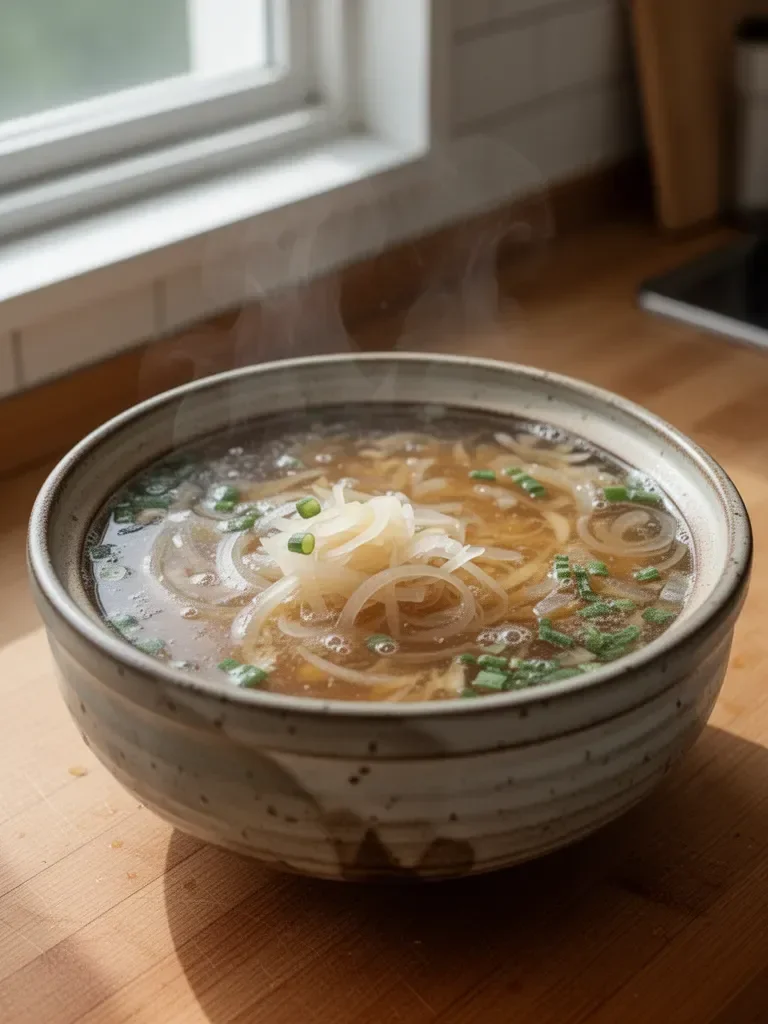
Serve the soup in deep bowls. The warm, inviting aroma will beckon everyone to the table. Garnishing with chopped green onions gives brightness and texture, making the dish visually appealing. Offer each bowl with a spoon to enhance the gathering experience.
Pairings/storage
While this soup stands alone beautifully, pairing it with a simple salad or steamed rice can round out the meal. Store any leftovers in an airtight container in the refrigerator for up to three days. Reheat gently on the stove, adding a bit of water if necessary to regain its original consistency.
Conclusion
Authentic Japanese onion soup invites you into a world of flavor that celebrates simplicity. Creating this dish requires a bit of time, but the results pay off with every bowl served. From the moment you slice the onions to the final garnish with green onions, this recipe is about enjoying the process of cooking. Each scoop brings warmth and comfort, making it a perfect meal for sharing with loved ones. Now you can enjoy this delightful soup that captures the essence of Japanese cuisine in your own kitchen.
Print
Authentic Japanese Onion Soup
- Prep Time: 10 minutes
- Cook Time: 30 minutes
- Total Time: 40 minutes
- Yield: 4 servings
- Category: Soup
- Method: Sautéing
- Cuisine: Japanese
- Diet: Vegetarian
Description
A warm and comforting Japanese onion soup that highlights the natural sweetness of onions in a rich dashi broth, enhanced with soy sauce and miso paste.
Ingredients
- 2 large onions, thinly sliced
- 4 cups dashi broth
- 2 tablespoons soy sauce
- 1 tablespoon miso paste
- Salt to taste
- Chopped green onions for garnish
Instructions
- Add the sliced onions to a pot over medium heat and sauté until they are soft and caramelized.
- Pour in the dashi broth and bring to a simmer.
- Stir in the soy sauce and miso paste, mixing until well combined.
- Season with salt to taste.
- Serve hot, garnished with chopped green onions.
Notes
For a deeper umami flavor, consider adding more miso or soy sauce. Store leftovers in an airtight container for up to three days.