
📑 Table of Contents ▶
- The Basics of Thai Coconut Chicken
- Fundamentals
- Preparation/Setup
- Directions
- Mastering the Technique of Thai Coconut Chicken
- Technique
- Tips/Tricks
- Perfecting Your Thai Coconut Chicken Experience
- Perfecting Results
- Troubleshooting/Variations
- Serving and Storing Your Thai Coconut Chicken
- Serving/Presentation
- Pairings/Storage
- Conclusion
Thai Coconut Chicken
I’m Della Lucia, and HealthyDinnerMeals was created from my belief that food should nourish both the body and the moments we share. My fondest memories come from simple homemade meals — not perfection, just comfort, connection, and care. Here, healthy eating stays approachable and satisfying, with recipes that fit real life: quick, flavorful, and balanced. Whether you’re cooking for yourself or loved ones, I hope these meals help you feel confident in the kitchen and inspired to enjoy every moment around the table.
When I first tasted Thai coconut chicken, I was immediately captivated by the rich flavors and comforting aroma. This dish brings back memories of relaxed evenings shared around the kitchen table. The balance of creamy coconut milk with the vibrant spices creates a symphony of taste that feels both intriguing and familiar.
As I began to experiment with recipes, I learned that you don’t need extensive culinary skills to recreate these flavors at home. Simple ingredients transform into a luxurious meal with a few easy steps. Thai coconut chicken proves that cooking can be a joyous experience, one bite at a time.
With its enticing mix of fresh vegetables and aromatic spices, this dish celebrates the beauty of healthy eating. The blend of chicken, coconut milk, and fragrant herbs forms a dish that’s not only delicious but also nourishing. Thai coconut chicken will quickly become a favorite in your culinary repertoire.
The Basics of Thai Coconut Chicken
Fundamentals
Thai coconut chicken combines basic ingredients to create a dish bursting with flavor. This meal showcases the gorgeous interplay between creamy coconut milk and spicy red curry paste. Understanding this balance sets the groundwork for a delightful cooking experience.
Ingredients like fish sauce and brown sugar deepen the flavor profile, while fresh vegetables like red bell peppers and snap peas add crunch and color. Each step in this recipe builds on the previous one, allowing flavors to mingle and develop.
Cooking can feel intimidating, but this recipe proves it doesn’t have to be. Emphasizing basic steps, you can achieve great results with minimal effort. With a little practice, you’ll feel confident in whipping up this scrumptious dish anytime.
Preparation/Setup
To kick off your culinary adventure, gather all your ingredients. The list includes chicken breast, coconut milk, red curry paste, fish sauce, brown sugar, chicken broth, red bell pepper, snap peas, garlic, ginger, and fresh basil leaves. Knowing what you need before starting keeps everything running smoothly.
Next, prepare your vegetables. Slice the red bell pepper and trim the snap peas. Mince the garlic and ginger, ensuring they’re ready to add that delightful aromatic kick. Preparing these ingredients in advance simplifies the cooking process.
Familiarize yourself with your cooking tools. A large pan or skillet is essential for sautéing and simmering the ingredients. If you have all your preparation completed, you ensure a seamless cooking experience, allowing all the flavors to shine.
Ingredients
- 1 lb chicken breast, cut into bite-sized pieces
- 1 can (13.5 oz) coconut milk
- 2 tbsp red curry paste
- 1 tbsp fish sauce
- 1 tbsp brown sugar
- 1 cup chicken broth
- 1 red bell pepper, sliced
- 1 cup snap peas
- 2 cloves garlic, minced
- 1 tbsp ginger, minced
- Fresh basil leaves for garnish
- Cooked jasmine rice, for serving
Directions
In a large pan, heat a little oil over medium heat. Add minced garlic and ginger, and sauté until fragrant. The aroma fills the air, promising deliciousness ahead. Add chicken pieces to the pan and cook until they are browned on all sides.
Stir in the red curry paste, fish sauce, and brown sugar. Allow the mixture to cook for another minute, letting the flavors meld. Pour in the coconut milk and chicken broth, stirring well to combine everything.
Throw in the sliced red bell pepper and snap peas, then bring the mixture to a gentle simmer. Cook for about 20 minutes, ensuring the chicken is cooked through and the vegetables remain vibrant yet tender.
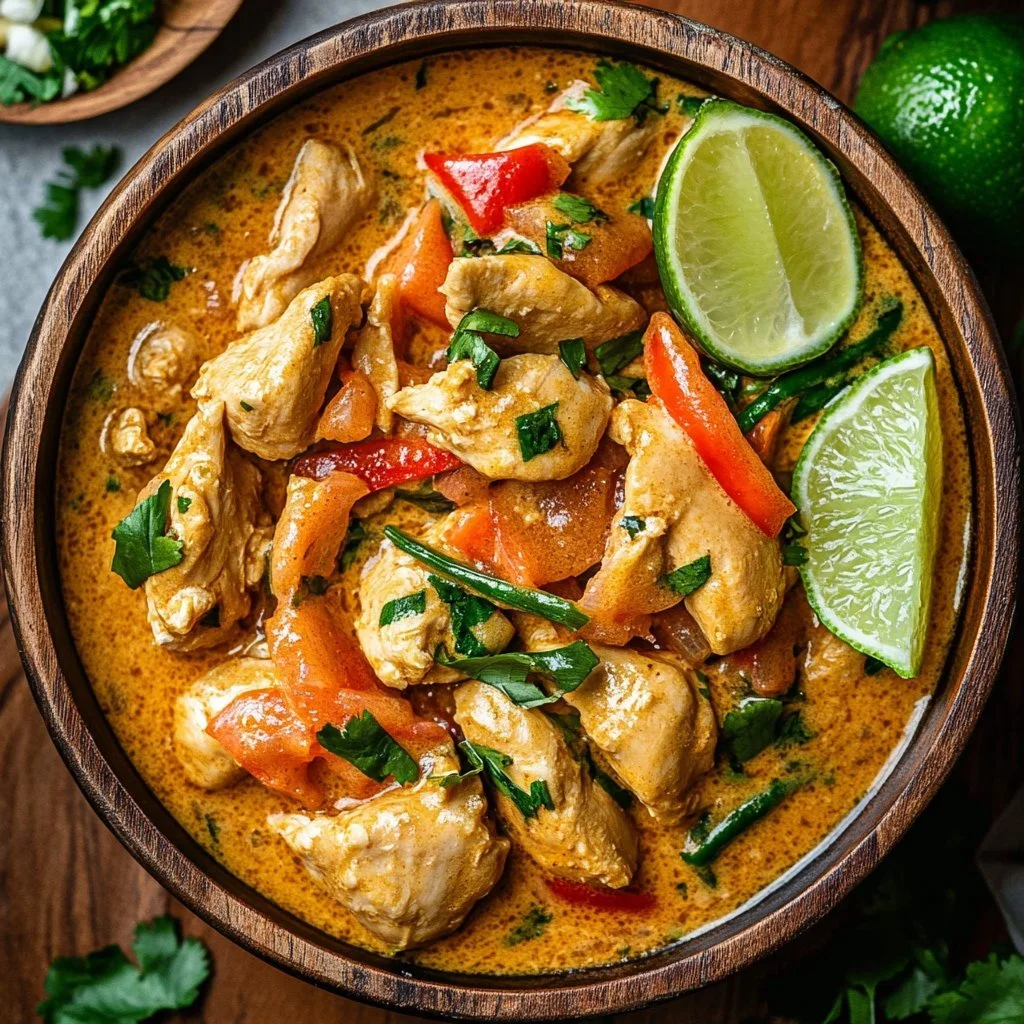
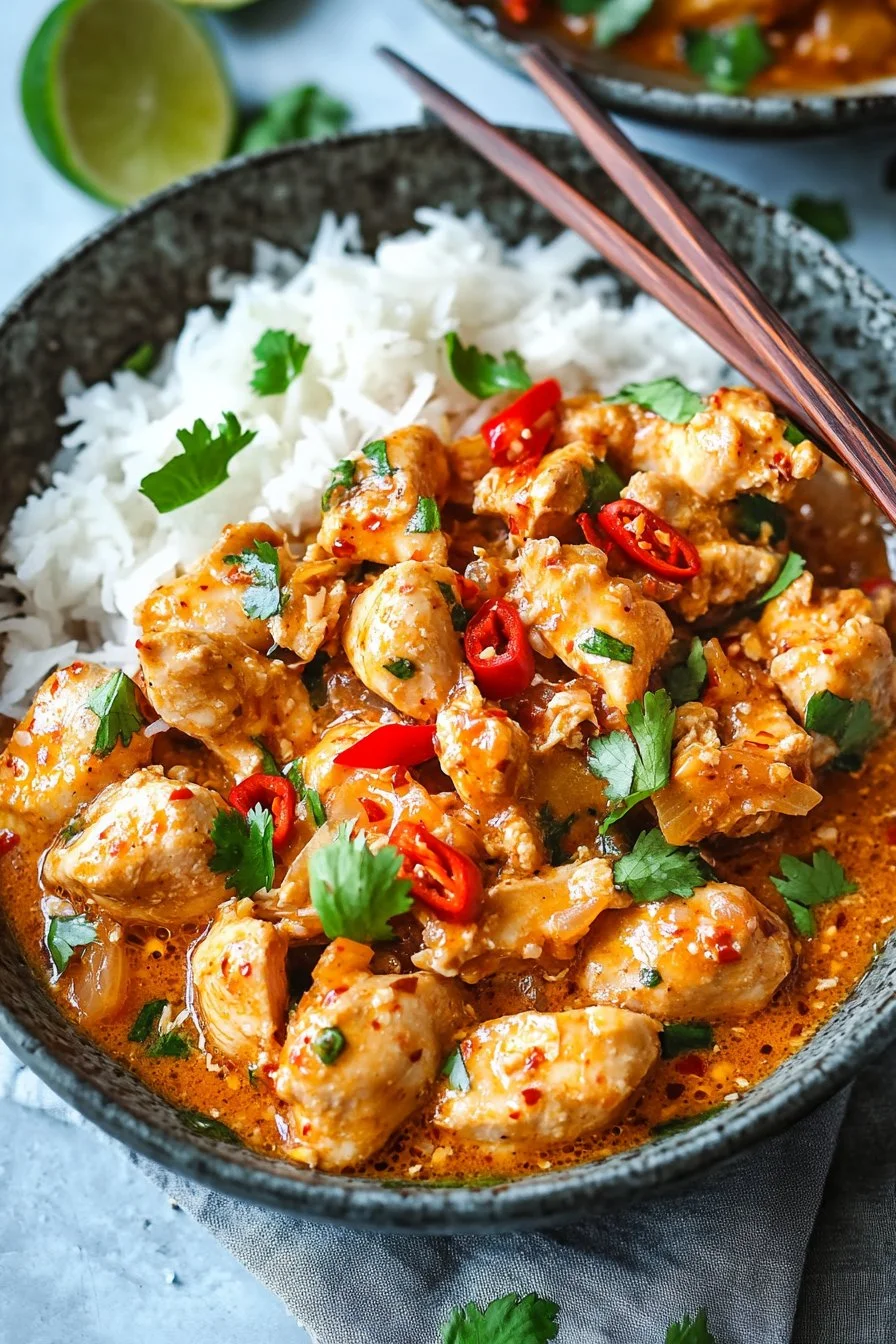
Serve the Thai coconut chicken over a bed of fluffy jasmine rice and garnish with fresh basil leaves for an inviting presentation.
Mastering the Technique of Thai Coconut Chicken
Technique
Cooking Thai coconut chicken relies on a few foundational techniques that enhance the dish’s overall appeal. Sautéing garlic and ginger releases essential oils, creating a fragrant base that permeates the entire dish.
Browning the chicken before mixing in other ingredients adds depth of flavor. Each piece picks up a slight caramelization, increasing complexity.
Simmering allows the flavors to develop harmoniously. Ensure that you don’t rush this step; let the mixture bubble gently to unite the ingredients beautifully.
Tips/Tricks
Keep a close eye on the heat as you sauté. Medium heat works best to prevent burning the garlic and ginger. If cooking hurriedly leads to burnt ingredients, it can introduce unwanted bitterness to your dish.
Experiment with the spice levels. If you prefer more heat, consider adding extra red curry paste or even a sprinkle of chili flakes. Tailoring the spice level ensures that everyone at the table enjoys their meal.
Vegetable substitutions can work well too. Feel free to introduce other favorites, like broccoli, carrots, or even zucchini, ensuring a colorful and nutritious dish.
Perfecting Your Thai Coconut Chicken Experience
Perfecting Results
Consistency is key when preparing Thai coconut chicken. Uniformly cut chicken pieces ensure even cooking throughout. Try to aim for bite-sized chunks that allow for quick and thorough browning.
Letting the dish simmer is equally essential. This final step helps marry the flavors while cooking down the coconut milk to achieve the desired thickness. You’ll know when it’s ready based on its inviting aroma and cohesive texture.
Taste for seasoning before serving. Adjust salt or sugar as needed, ensuring the dish meets your unique preferences. A balanced final flavor guarantees a delightful dining experience.
Troubleshooting/Variations
If your chicken appears tough, consider reducing cooking time or slicing the meat thinner. Overcooking leads to dryness, creating a less-than-ideal texture.
For creamier options, increase the amount of coconut milk and reduce chicken broth slightly. This adjustment enhances the overall richness of the dish, making your Thai coconut chicken even more satisfying.
Vegetarian options can also easily adapt this recipe. Substitute chicken with tofu or tempeh, absorbing the same rich flavors while maintaining a delightful texture.
Serving and Storing Your Thai Coconut Chicken
Serving/Presentation
Presentation reflects the care put into your meal. Serve the Thai coconut chicken over jasmine rice, ensuring a beautiful mound of fluffy grains. The contrast of colors from the vibrant vegetables and the creamy sauce makes for an eye-catching plate.
Garnish with fresh basil leaves right before serving. This touch not only enhances the visual appeal but also adds an aromatic freshness to the dish.
Travel back to that cozy meal time ambiance with inviting serving dishes. Whether serving family style or individual plates, the comforting essence of your Thai coconut chicken will shine through.
Pairings/Storage
While enjoying your Thai coconut chicken, you can consider pairing it with a light salad or fresh spring rolls for an engaging meal. The crisp vegetables enhance the overall experience, making each bite essential.
When storing leftovers, place them in an airtight container in the refrigerator. This ensures that the flavors continue to mingle. Thai coconut chicken typically stays fresh for 3-4 days, giving you ample opportunity to enjoy it again throughout the week.
Always reheat gently on the stovetop to preserve the creamy texture. Combine with fresh herbs or a splash of coconut milk if needed, ensuring every serving delights.
Conclusion
Cooking Thai coconut chicken delivers comfort and joy in every bite. This vibrant dish combines the tenderness of chicken with the creamy aspect of coconut milk, creating a stunning meal you can enjoy any night of the week. The bright flavors and satisfying ingredients celebrate healthy eating at its best. Each step reveals how effortless it is to create a remarkable dish that impresses while nourishing. This recipe surely becomes a staple in your culinary lineup. Enjoy the warmth and nourishment it brings.
Print
Thai Coconut Chicken
- Prep Time: 15 minutes
- Cook Time: 30 minutes
- Total Time: 45 minutes
- Yield: 4 servings
- Category: Main Course
- Method: Sautéing, Simmering
- Cuisine: Thai
- Diet: Gluten-Free
Description
A comforting dish combining chicken with creamy coconut milk and vibrant spices for a delightful culinary experience.
Ingredients
- 1 lb chicken breast, cut into bite-sized pieces
- 1 can (13.5 oz) coconut milk
- 2 tbsp red curry paste
- 1 tbsp fish sauce
- 1 tbsp brown sugar
- 1 cup chicken broth
- 1 red bell pepper, sliced
- 1 cup snap peas
- 2 cloves garlic, minced
- 1 tbsp ginger, minced
- Fresh basil leaves for garnish
- Cooked jasmine rice, for serving
Instructions
- In a large pan, heat a little oil over medium heat. Add minced garlic and ginger, and sauté until fragrant.
- Add chicken pieces to the pan and cook until they are browned on all sides.
- Stir in the red curry paste, fish sauce, and brown sugar. Allow the mixture to cook for another minute.
- Pour in the coconut milk and chicken broth, stirring well to combine.
- Add the sliced red bell pepper and snap peas, then bring the mixture to a gentle simmer. Cook for about 20 minutes.
- Serve the Thai coconut chicken over a bed of fluffy jasmine rice and garnish with fresh basil leaves.
Notes
Adjust the spice level by adding more red curry paste or chili flakes. For a creamier texture, increase coconut milk and reduce chicken broth.