
📑 Table of Contents ▶
- Parmesan Roasted Asparagus With Tomatoes and Balsamic
- Crafting the Perfect Parmesan Roasted Asparagus With Tomatoes and Balsamic
- Fundamentals
- Preparation/setup
- Executing the Parmesan Roasted Asparagus With Tomatoes and Balsamic
- Technique
- Tips/tricks
- Refining Your Parmesan Roasted Asparagus With Tomatoes and Balsamic
- Perfecting results
- Troubleshooting/variations
- Enhancing Your Parmesan Roasted Asparagus With Tomatoes and Balsamic
- Serving/presentation
- Pairings/storage
- Conclusion
- FAQs – Parmesan Roasted Asparagus With Tomatoes and Balsamic
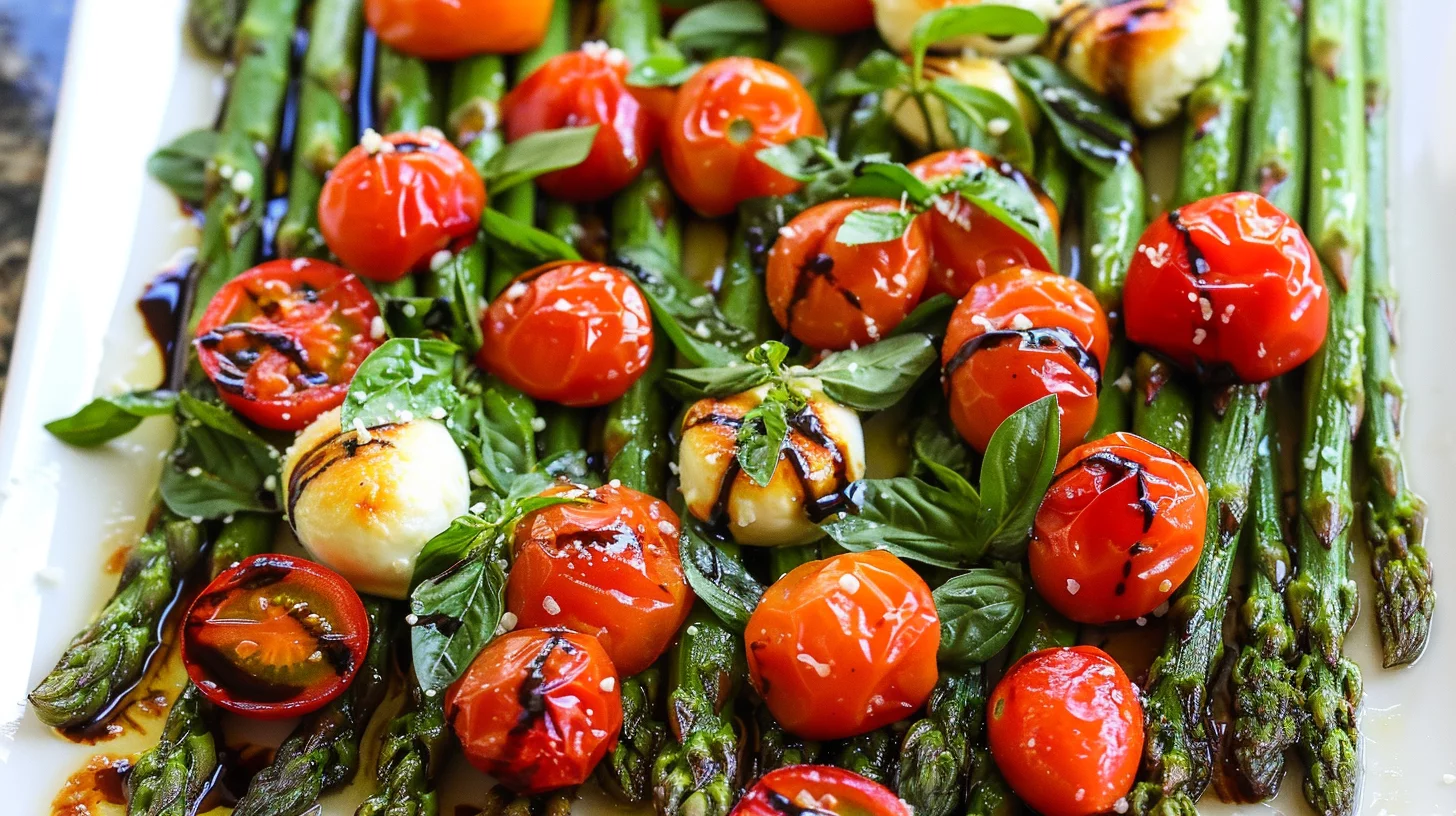
In my kitchen, the aroma of fresh ingredients often mingles with laughter and stories. One dish that always brings my family together is Parmesan Roasted Asparagus With Tomatoes and Balsamic. This simple yet flavorful combination of fresh asparagus, juicy tomatoes, and the rich tang of balsamic reduction makes every meal an occasion. I remember the first time I prepared this dish; the vibrant colors and tantalizing scents filled our home, transforming an ordinary evening into a cherished memory.
The magic of Parmesan Roasted Asparagus With Tomatoes and Balsamic lies in its simplicity. It requires minimal ingredients but promises a delightful burst of flavors. As I trimmed the asparagus and halved the cherry tomatoes, I felt a sense of satisfaction knowing that this nutritious dish would nourish my loved ones. Each step, from preparing the vegetables to drizzling the balsamic reduction, offers a moment of mindfulness and connection.
Parmesan Roasted Asparagus With Tomatoes and Balsamic is more than just a dish; it’s a celebration of wholesome ingredients and uncomplicated cooking. This recipe reflects my philosophy that good food doesn’t have to be elaborate. By focusing on quality ingredients and straightforward techniques, I create meals that are both delicious and nourishing. This recipe has become a staple in our home, a testament to the power of sharing simple, healthy food.
Print
Parmesan Roasted Asparagus With Tomatoes and Balsamic
- Prep Time: 15 minutes
- Cook Time: 15 minutes
- Total Time: 30 minutes
- Yield: 4 servings
- Category: Main Course
- Method: Baking
- Cuisine: Italian
Description
Learn how to make Parmesan Roasted Asparagus with Tomatoes and Balsamic in this easy recipe. Perfect for a flavorful and healthy side dish!
Ingredients
- 1 bunch asparagus, trimmed
- 473 ml (2 cups) cherry tomatoes, halved (or quartered depending on their size)
- 2–3 garlic cloves, minced
- 120 g (1 cup) shredded beef mozzarella
- 15 ml (1 Tbsp) vegetable oil
- 25 ml (1/4 tsp) salt
- 25 ml (1/4 tsp) black pepper
- 7 large basil leaves, sliced thin
- Balsamic reduction (store bought or homemade)
Instructions
- Set your oven to preheat at 425°F and prepare a large baking sheet by covering it with parchment paper.
- In a bowl, combine the halved cherry tomatoes, minced garlic, and a teaspoon of vegetable oil. Add salt and pepper to your liking, then put it aside.
- Break off the tough ends of the asparagus and place them in a large bowl. Mix them with ¼ teaspoon of salt, ¼ teaspoon of black pepper, and a tablespoon of vegetable oil, then arrange them in a row on the lined baking sheet.
- Evenly distribute the shredded beef mozzarella over the asparagus and add the tomato mixture on top.
- Insert the baking sheet into the oven and cook for 12-15 minutes, or until the asparagus and tomatoes are soft.
- After baking, scatter the thinly sliced basil leaves over the tomatoes and drizzle with balsamic reduction. Alternatively, you can add the balsamic reduction to each portion individually. Serve right away.
Notes
- Try using a mix of cherry tomato colors for a visually stunning dish.
- Ensure the shredded beef mozzarella is evenly spread over the asparagus for a cheesy bite.
- Add a personal touch by experimenting with herbs like oregano or thyme for a unique flavor twist.
Crafting the Perfect Parmesan Roasted Asparagus With Tomatoes and Balsamic
Fundamentals
Understanding the basics of creating Parmesan Roasted Asparagus With Tomatoes and Balsamic is essential for a successful dish. Start by selecting fresh asparagus. The stalks should be firm and vibrant green, indicating their freshness. Cherry tomatoes add a juicy sweetness, balancing the savory notes of mozzarella and the tanginess of balsamic reduction. Finally, a touch of minced garlic enhances the overall flavor profile, making each bite memorable.
Preparation/setup
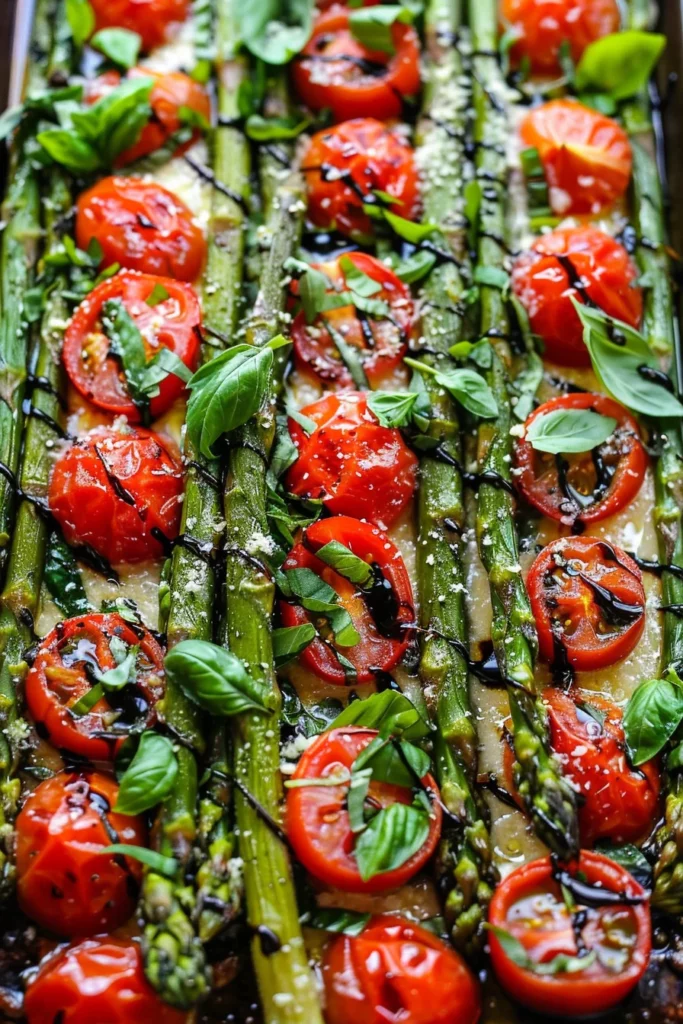
Begin by preheating your oven to 425°F and lining a large baking sheet with parchment paper. This setup ensures even cooking and prevents sticking. As you prepare the vegetables, pay attention to the details. Trim the asparagus, ensuring any tough ends are removed, and halve the cherry tomatoes. In one bowl, mix the tomatoes with minced garlic, a teaspoon of vegetable oil, salt, and pepper. In another, coat the asparagus with oil, salt, and pepper, setting the stage for roasting perfection.
Parmesan Roasted Asparagus With Tomatoes and Balsamic
Executing the Parmesan Roasted Asparagus With Tomatoes and Balsamic
Technique
With your ingredients prepared, it’s time to bring them together. Arrange the seasoned asparagus in a row on the baking sheet, ensuring even spacing for optimal roasting. Sprinkle the shredded beef mozzarella over the asparagus, allowing it to melt and infuse the dish with its rich flavor. Top with the tomato mixture, ensuring even distribution. This layering technique ensures each element merges harmoniously during roasting.
Tips/tricks
To enhance your Parmesan Roasted Asparagus With Tomatoes and Balsamic, consider these tips. For extra flavor, use a high-quality balsamic reduction, or make your own by simmering balsamic vinegar until it thickens. This will add depth to your dish. Additionally, when slicing basil leaves, stack them before slicing to create even, thin strips. This method enhances both flavor and presentation, adding a touch of elegance to the final dish.
Refining Your Parmesan Roasted Asparagus With Tomatoes and Balsamic
Perfecting results
Achieving perfection with Parmesan Roasted Asparagus With Tomatoes and Balsamic requires attention to detail. Monitor the oven closely as the dish roasts. Within 12-15 minutes, the asparagus will become tender, and the tomatoes will soften, releasing their juices. The mozzarella should melt beautifully, creating a cheesy layer that binds the flavors together. As you remove the baking sheet from the oven, garnish the dish with sliced basil leaves and drizzle with balsamic reduction. This finishing touch elevates the dish, adding a burst of freshness and a hint of sweetness.
Troubleshooting/variations
Should you encounter any challenges, consider these troubleshooting tips. If the asparagus appears undercooked, return it to the oven for a few more minutes. For a variation, experiment with different types of cheese. While mozzarella offers a mild, creamy texture, parmesan or feta can add a unique twist. For further inspiration on roasted vegetable dishes, explore these oven-roasted zucchini, squash, and tomatoes with parmesan.
Enhancing Your Parmesan Roasted Asparagus With Tomatoes and Balsamic
Serving/presentation
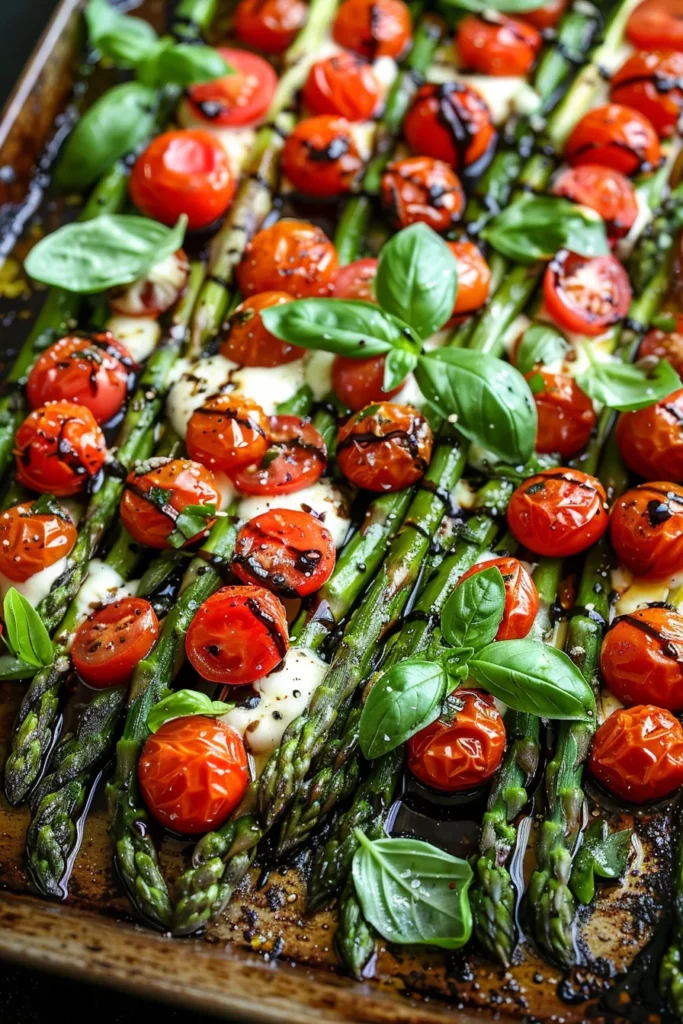
Presentation plays a crucial role in the enjoyment of Parmesan Roasted Asparagus With Tomatoes and Balsamic. Serve it directly from the baking sheet or transfer it to a platter for a more polished look. Arrange the asparagus in neat rows, topped with the glistening tomatoes and melted cheese. For a vibrant touch, scatter fresh basil leaves on top and offer additional balsamic reduction on the side, allowing guests to customize their servings.
Parmesan Roasted Asparagus With Tomatoes and Balsamic
Pairings/storage
While this dish stands strong on its own, pair it with complementary sides for a complete meal. Consider serving it alongside a roasted veggie and chickpea bowl or garlic parmesan sweet potato wedges. These additions provide a balance of textures and flavors. To store leftovers, place them in an airtight container in the refrigerator for up to three days. Reheat gently in the oven to preserve the dish’s integrity.
Conclusion
Parmesan Roasted Asparagus With Tomatoes and Balsamic embodies the essence of simple, flavorful cooking. By focusing on fresh ingredients and straightforward techniques, this dish offers a delightful culinary experience. Its strengths lie in the harmonious blend of textures and flavors, making it a versatile addition to any meal. Whether served as a side or a main course, this recipe promises to create cherished memories and bring people together around the table.