
📑 Table of Contents ▶
Gochujang Chicken
I’m Della Lucia, and HealthyDinnerMeals was created from my belief that food should nourish both the body and the moments we share. My fondest memories come from simple homemade meals — not perfection, just comfort, connection, and care. Here, healthy eating stays approachable and satisfying, with recipes that fit real life: quick, flavorful, and balanced. Gochujang chicken perfectly encapsulates this philosophy, delivering an explosion of taste with minimal effort.
This dish whisks you away to Korea’s vibrant culinary scene with every bite. The sweet and spicy gochujang offers a tantalizing flavor that transforms humble chicken thighs into a culinary masterpiece. Marinating the chicken in this rich sauce not only enhances its taste but also keeps it tender and juicy. As you savor the end results, you’ll appreciate the simplicity and depth this recipe delivers.
Gochujang chicken serves as an ideal centerpiece for family dinners or a quick weeknight meal. It’s versatile, comforting, and a guaranteed crowd-pleaser. Whether you’re catering to adventurous palates or those who prefer familiar flavors, this dish bridges the gap, making it a staple in your kitchen.
Gochujang Chicken: Fundamentals
Fundamentals
Understanding the basics of making delicious gochujang chicken is straightforward. The key lies in the marinade. Gochujang, a Korean chili paste, introduces heat and umami to your dish. Combining it with soy sauce, honey or maple syrup, rice vinegar, garlic, and ginger creates a balanced sauce that complements the chicken perfectly. The marinating time is essential for allowing these flavors to marry and penetrate the meat.
Chicken thighs are the ideal choice for this recipe. Their higher fat content ensures they remain moist and tender during cooking. Plus, with the right cooking method, you can achieve a fantastic caramelized crust that adds depth to each bite. Master these fundamentals, and you’ll deliver a memorable meal every time.
Preparation/setup
Preparation sets the tone for an enjoyable cooking experience. Start by gathering your ingredients: chicken thighs, gochujang paste, soy sauce, honey or maple syrup, rice vinegar, garlic, ginger, sesame oil, and neutral oil. Gather your mixing bowls, cutting board, and utensils, allowing the cooking process to flow smoothly.
Taking the time to pat the chicken dry enhances the marinade’s adhesion. This small step ensures that each piece is well-coated, maximally absorbing the flavors. And don’t forget to preheat your oven or skillet before cooking, which sets you up for perfectly cooked chicken.
Ingredients
Here’s what you’ll need for the best gochujang chicken:
- 600 g boneless, skinless chicken thighs
- 3 tbsp gochujang paste
- 2 tbsp soy sauce
- 1 tbsp honey or maple syrup
- 1 tbsp rice vinegar
- 2 cloves garlic, minced
- 1 tsp freshly grated ginger
- 1 tbsp sesame oil
- 1 tbsp neutral oil
- 2 spring onions, sliced
- 1 tsp sesame seeds
Gather these ingredients to ensure you have everything at hand for your cooking adventure.
Directions
- In a medium bowl, whisk together the gochujang, soy sauce, honey, rice vinegar, minced garlic, and grated ginger until smooth.
- Pat the chicken thighs dry with paper towels, allowing the marinade to cling better.
- Add the chicken to the bowl and toss thoroughly until every piece is well-coated. Cover and marinate in the fridge for at least 30 minutes, or for a deeper flavor, one to two hours.
- Preheat your oven to 200°C (400°F) if baking, or heat a large skillet over medium-high heat with neutral oil.
- For baking: Arrange the chicken on a lined baking sheet, spoon extra marinade over the top, and bake for 18–22 minutes until cooked through and slightly charred. For pan-cooking: Place the chicken in the hot skillet and cook for 5–7 minutes per side until a nice caramelized crust forms and the internal temperature reaches 75°C (165°F).
- Transfer the cooked chicken to a cutting board and allow it to rest for a few minutes. Drizzle with sesame oil and sprinkle with sliced spring onions and sesame seeds before serving.
Gochujang Chicken: Technique
Technique
Mastering the cooking technique plays a significant role in achieving the best results with gochujang chicken. The choice between baking and pan-cooking depends on your preference and available time. Each method brings out unique textures and flavors. Baking yields a more uniform cooking process, while pan-cooking allows for a beautiful caramelized crust that enhances the overall taste.
If you opt for baking, taking the time to spoon extra marinade over the chicken before placing it in the oven is worth it. This step amplifies flavor and moisture, ensuring your dish is rich and satisfying. For pan-cooking, keep your skillet well-heated to achieve that signature sear, locking in juices while forming a delicious crust.
Tips/tricks
Here are some handy tips to elevate your gochujang chicken game:
- Marinating Time: Marinating for a longer period, up to two hours, will enhance flavor absorption and tenderness. If time allows, opt for the longer duration.
- Patience in Cooking: Allow the chicken to cook undisturbed in the skillet for a few minutes to develop a golden crust before flipping.
- Internal Temperature: Use a meat thermometer to check the internal temperature for safety and best results. Aim for at least 75°C (165°F).
- Adjusting Spice Levels: If you prefer milder flavors, reduce the amount of gochujang or add extra honey to balance the spice.
Implementing these tips guarantees an even better dining experience every time you make gochujang chicken.
Gochujang Chicken: Perfecting Results
Perfecting results
Perfecting your gochujang chicken comes with practice and attention to detail. The first step involves ensuring your chicken is of high quality, free of excess moisture. This choice dramatically impacts the tenderness and flavor of the final dish. A proper marination period allows all the flavors to meld beautifully, delivering that quintessential Korean flavor profile.
Adjust the cooked chicken to your desired doneness for optimal results. When it’s cooked just right, the chicken remains juicy inside and crispy outside. Continue to experiment with cooking times and methods until you find the perfect technique that works best for your kitchen equipment.
Troubleshooting/variations
Cooking can sometimes go astray. If your gochujang chicken happens to turn out too spicy, consider pairing it with a cooling side, such as a cucumber salad or a yogurt-based condiment. On the other hand, if it lacks flavor, revisit the marination step, ensuring each piece of chicken is well-coated.
Variations can also add excitement to this recipe. Consider adding vegetables to your baking sheet, such as bell peppers or broccoli, to boost the nutrient content and create a complete meal. If you want a different flavor profile, experiment with different sauces or spices during the marinating process to discover new favorites.
Gochujang Chicken: Serving and Storage
Serving/presentation
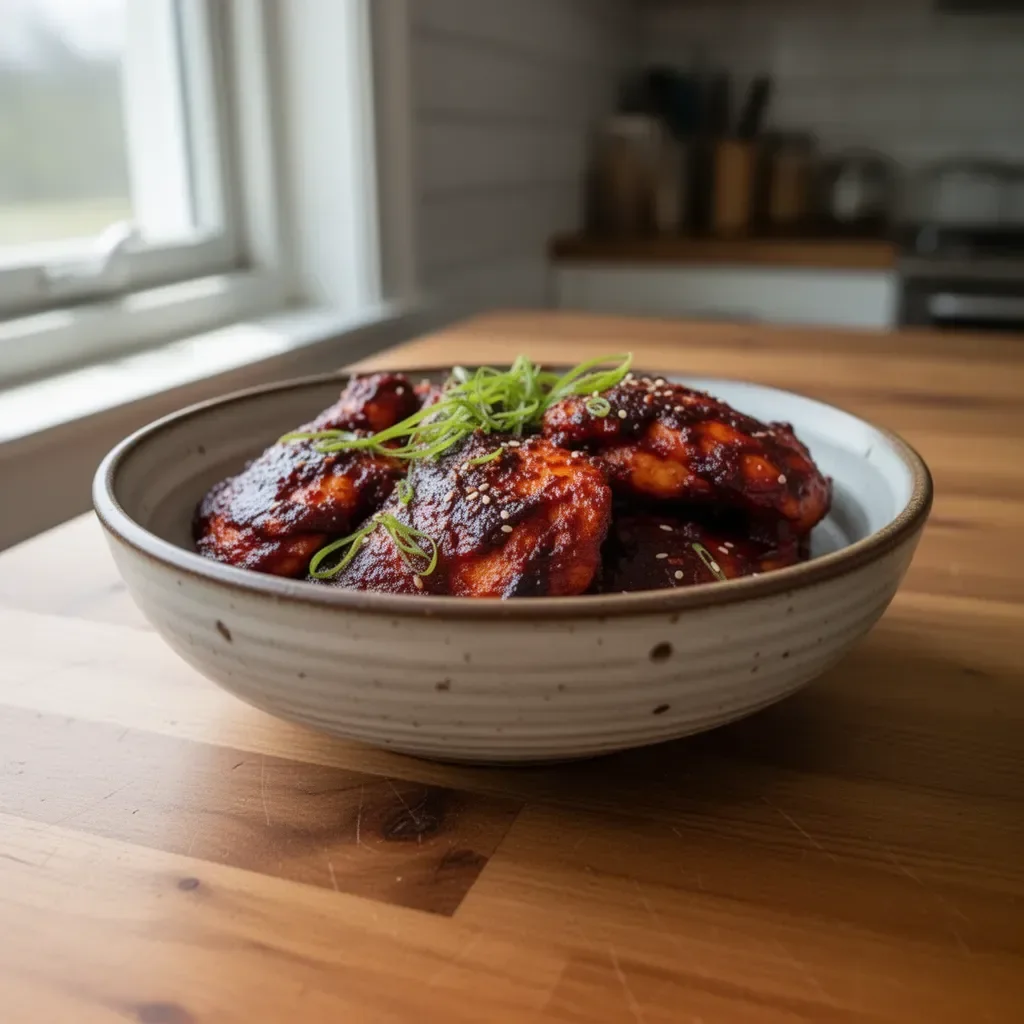
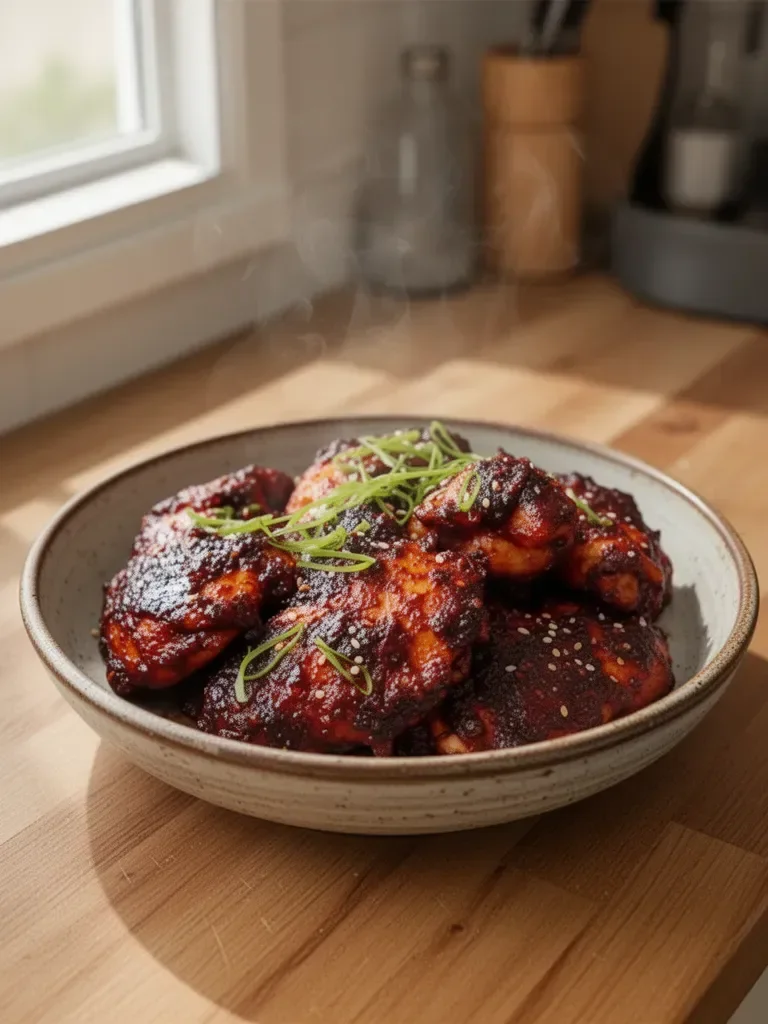
Presentation enhances the dining experience for any meal. For gochujang chicken, serving it atop a bed of rice or alongside steamed vegetables elevates both flavor and visual appeal. Garnish the dish with fresh spring onions and a sprinkle of sesame seeds to add color and texture.
Consider adding a small bowl of kimchi on the side for a traditional Korean touch. Not only does this enhance the meal, but it also brings in delightful complexity and sharpness that complements the rich, spicy chicken.
Pairings/storage
When considering pairings, focus on accompaniments that can hold their own against the bold flavors of gochujang chicken. Serve it with fluffy rice or a grain alternative like quinoa or bulgur to balance the meal. Steamed vegetables, stir-fried greens, or a simple salad make excellent sides for adding freshness and balance.
For storage, leftover gochujang chicken keeps well in the refrigerator for up to 3 days. Place it in an airtight container to retain moisture. Reheat in a skillet or microwave when you’re ready to enjoy it again. The flavors often deepen after a day in the fridge, making it even more delicious.
Incorporating gochujang chicken into your meal rotation enriches both your kitchen and your dining experiences. Dive into the vibrant flavors of this recipe and savor the joy it brings to your table.
Print
Gochujang Chicken
- Prep Time: 15 minutes
- Cook Time: 30 minutes
- Total Time: 45 minutes
- Yield: 4 servings
- Category: Main Course
- Method: Baking or Pan-Cooking
- Cuisine: Korean
- Diet: Gluten-Free
Description
Gochujang chicken features tender, juicy chicken thighs marinated in a sweet and spicy gochujang sauce, perfect for family dinners or quick weeknight meals.
Ingredients
- 600 g boneless, skinless chicken thighs
- 3 tbsp gochujang paste
- 2 tbsp soy sauce
- 1 tbsp honey or maple syrup
- 1 tbsp rice vinegar
- 2 cloves garlic, minced
- 1 tsp freshly grated ginger
- 1 tbsp sesame oil
- 1 tbsp neutral oil
- 2 spring onions, sliced
- 1 tsp sesame seeds
Instructions
- Whisk together the gochujang, soy sauce, honey, rice vinegar, minced garlic, and grated ginger in a medium bowl until smooth.
- Pat the chicken thighs dry with paper towels, allowing the marinade to cling better.
- Add the chicken to the bowl and toss thoroughly until every piece is well-coated. Cover and marinate in the fridge for at least 30 minutes, or for a deeper flavor, one to two hours.
- Preheat your oven to 200°C (400°F) if baking, or heat a large skillet over medium-high heat with neutral oil.
- For baking: Arrange the chicken on a lined baking sheet, spoon extra marinade over the top, and bake for 18–22 minutes until cooked through and slightly charred.
- For pan-cooking: Place the chicken in the hot skillet and cook for 5–7 minutes per side until a nice caramelized crust forms and the internal temperature reaches 75°C (165°F).
- Transfer the cooked chicken to a cutting board and allow it to rest for a few minutes. Drizzle with sesame oil and sprinkle with sliced spring onions and sesame seeds before serving.
Notes
For best results, serve with rice or steamed vegetables. Leftovers keep well in the refrigerator for up to 3 days.