
📑 Table of Contents ▶
Easy Sourdough Loaf
I’m Della Lucia, and HealthyDinnerMeals was created from my belief that food should nourish both the body and the moments we share. My fondest memories come from simple homemade meals — not perfection, just comfort, connection, and care. Here, healthy eating stays approachable and satisfying, with recipes that fit real life: quick, flavorful, and balanced. Whether you’re cooking for yourself or loved ones, I hope these meals help you feel confident in the kitchen and inspired to enjoy every moment around the table.
Baking a sourdough loaf becomes more than just following a recipe; it turns into an expressive art form rooted in tradition and community. With every rise and fold, you connect to a generations-old practice of nurturing dough. Each loaf encapsulates warmth and anticipation, inviting you to savor every moment of the process.
Imagine the moment when you pull a freshly baked sourdough loaf from the oven, the crust crackling, and the aroma filling your home. Creating an easy sourdough loaf allows you to experience this joy without needing elaborate techniques or hard-to-find ingredients. Simplicity reigns supreme, encouraging you to embrace your culinary creativity.
The beauty of sourdough is in its balance between science and instinct. With practice, you will learn to read your dough, adjusting your technique as necessary. This easy sourdough loaf represents an approachable entry point to baking that welcomes everyone, regardless of experience.
Easy Sourdough Loaf Basics
Fundamentals
To successfully create an easy sourdough loaf, you need a few fundamental concepts. The process focuses on fermentation, where wild yeast and bacteria work together to create flavor. Understanding how these microorganisms develop in the dough helps in achieving the perfect loaf.
The basic components of sourdough involve flour, water, salt, and an active starter. Each ingredient plays a crucial role. The flour supplies the structure, water hydrates the dough, salt enhances flavor, and the starter provides the necessary yeast for leavening. This combination is what creates that beautiful loft and chewy texture characteristic of sourdough bread.
Preparation/Setup
Preparation is key. Begin by gathering all your ingredients: 125 grams of active starter, 325 grams of room temperature filtered or bottled water, 500 grams of flour, and 10 grams of salt. Ensure that your workspace is clean and organized. Having everything in place will streamline your bread-making experience.
Mix the flour and water gently in a large glass bowl until a sticky dough forms. Cover the bowl with a towel or plastic wrap and let it rest for one hour. This resting period allows the flour to fully hydrate, developing the gluten network necessary for a good rise.
Ingredients
Here’s a summarized list of the ingredients required for an easy sourdough loaf:
- 125 grams (or 1 cup) of active starter
- 325 grams (or 1 1/4 cup) of room temperature filtered or bottled water
- 500 grams (or 4 cups) of flour
- 10 grams (or 2 tsp) of salt
Using high-quality ingredients will always yield the best results. The flour should ideally be unbleached for the most robust flavor while the water should be clean and free from chlorine.
Directions
- In a large glass bowl, mix the flour and water until a sticky dough forms. Cover with a bowl cover, plastic wrap, or a wet towel. Let it rest for one hour.
- Add the active starter and salt to the dough. Mix with wet hands until fully combined. The dough will appear shaggy.
- Cover the bowl and allow the dough to rest for another hour.
- Perform four sets of stretch and folds, spaced 30 minutes apart. This builds the dough’s strength.
- Cover the bowl and let the dough sit on the counter until it doubles in size. This timing varies with home temperature, sometimes taking several hours.
- Once doubled, turn the dough onto a floured surface (rice flour is ideal). Shape it into a ball using the push-and-pull technique.
- Place the dough into a floured banneton or a bowl lined with a floured tea towel, seam-side up. Optional: Cover and refrigerate overnight or proceed to baking.
- Preheat your Dutch oven to 475°F (245°C).
- Flip the dough onto parchment paper or a dough sling and sprinkle the top with rice flour.
- Use a lame to score the top of the dough.
- Place the dough in the preheated Dutch oven, cover it with the lid, and bake for 30 minutes.
- After 30 minutes, remove the lid and reduce the temperature to 425°F (220°C). Bake for an additional 20 minutes. The bread should reach an internal temperature of at least 200°F (93°C).
- Let the loaf cool for at least 2 hours before slicing.
Mastering the Technique
Technique
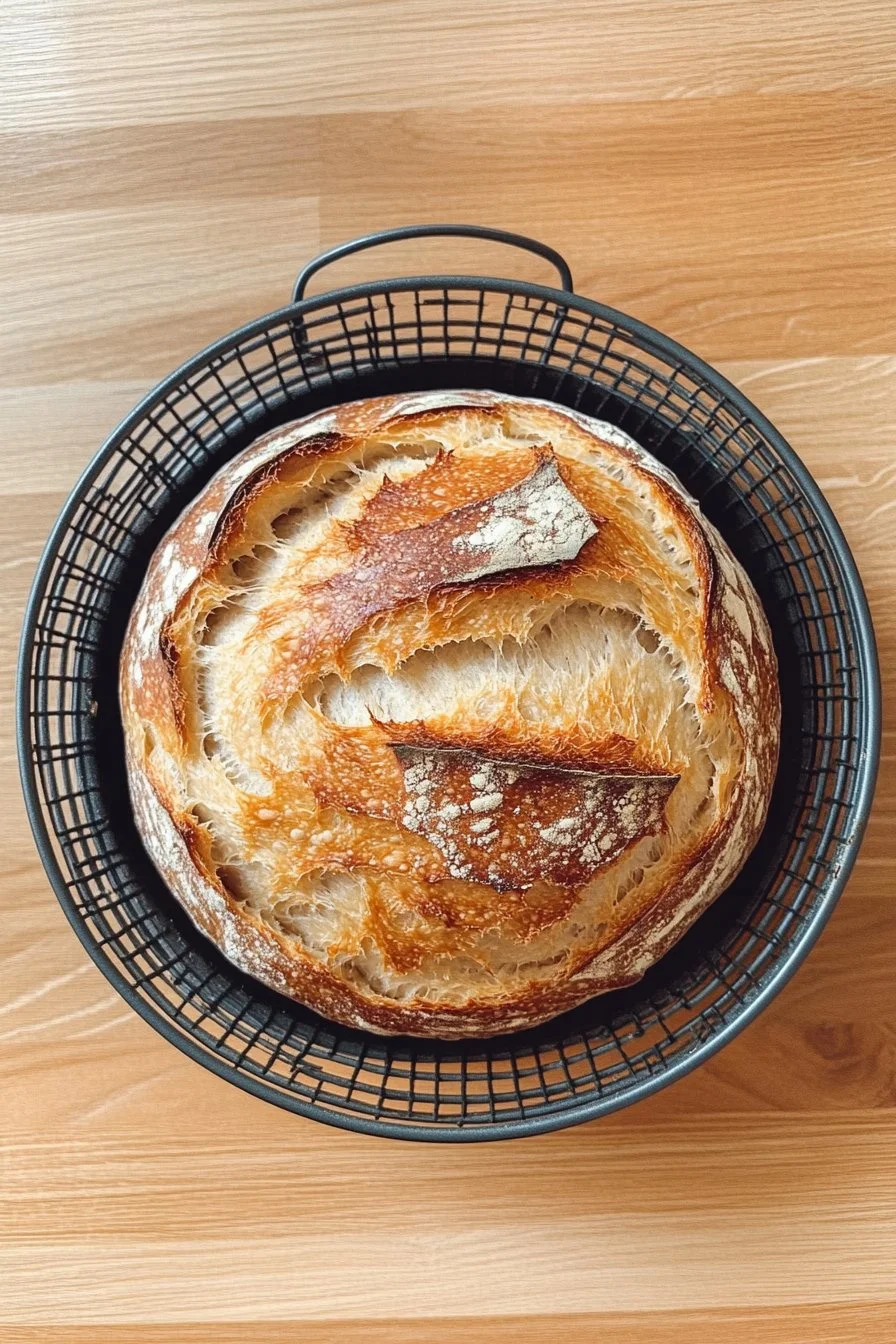
Mastering the technique of an easy sourdough loaf requires patience and practice. Each step from mixing to shaping plays a pivotal role in achieving a flavorful bread.
During the stretch and fold phase, you go beyond simple mixing. This handling of the dough introduces air, which contributes to its rise and texture. Every fold strengthens the gluten network while incorporating additional air pockets.
As you shape the dough, utilize the push-and-pull technique. It allows you to create surface tension, guiding the dough’s expansion during the final rise and bake. The more you practice, the more instinctive this technique becomes.
Tips/Tricks
A few simple tips can elevate your sourdough game. First, maintain a consistent temperature during fermentation. Dough rises more optimally in a warm, draft-free area. If your kitchen is cool, consider using the oven with just the light on to provide a gentle warmth.
Experiment with hydration levels for a softer crumb. Higher hydration doughs can produce a lighter, airier loaf, but they also require more skill to handle. Start with a basic dough recipe before venturing into higher hydration options.
Be intentional with your timing too. Develop your intuition about when the dough has doubled, as variations in ambient temperature can affect rise times significantly.
Perfecting the Results
Perfecting Results
To perfect your easy sourdough loaf, monitor the fermentation process closely. The dough should appear bubbly and elastic when it’s ready to be shaped. If in doubt, perform the poke test: gently poke the dough; if it springs back slowly, it’s ready. If it deflates quickly, give it more time.
Baking temperature matters. Start in a very hot Dutch oven to create steam, which helps develop a crust that’s both chewy and flavorful. After removing the lid, lower the temperature to ensure thorough cooking without burning the outer crust.
Troubleshooting/Variations
Sourdough baking is not without its quirks. If your dough does not rise properly, factors such as starter strength, temperature, and hydration level can be at play. An underactive starter might require feeding more frequently.
You can also explore variations in flavor. Incorporate herbs, seeds, or nuts during the mixing phase for added texture and taste. Adjust your flour blend; try incorporating whole wheat or spelt for a nutritional boost and difference in flavor.
Serving Your Sourdough Loaf
Serving/Presentation
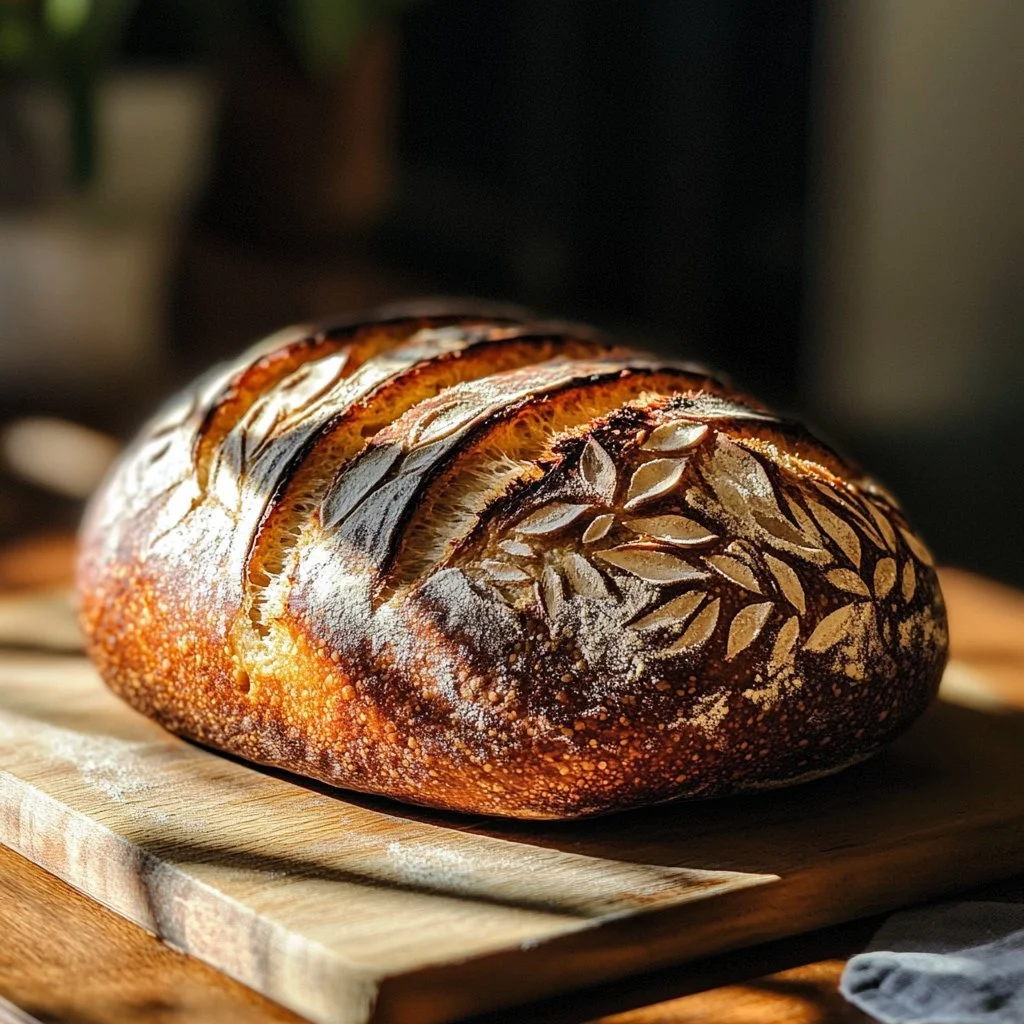
When it comes to serving your easy sourdough loaf, the presentation can enhance the experience. Slice it carefully using a serrated knife to maintain the crust’s integrity. Showcase your bread on a wooden board as a centerpiece.
Pair it beautifully with spreads such as butter or olive oil, or enjoy it simply on its own. The crumb and crumb structure deserve to shine, which enhances each bite.
Pairings/Storage
For the best pairing experiences, think about simple accompaniments that highlight homemade flavors. You might enjoy this sourdough loaf with hearty soups, vibrant salads, or as a base for creative sandwiches. Spreads like hummus or avocado elevate the eating experience.
When it comes to storage, keep your sourdough loaf wrapped in a cloth at room temperature for short-term use. For longer storage, slice the loaf and freeze it in an airtight bag. This way, you can enjoy fresh slices whenever you crave them.
Baking an easy sourdough loaf offers a heartwarming journey into a beautiful culinary tradition. Each loaf encapsulates moments of connection and creativity. Take your time, embrace the process, and cherishing each delicious slice will only enhance your joy in creating this timeless staple.
Print
Easy Sourdough Loaf
- Prep Time: 120 minutes
- Cook Time: 50 minutes
- Total Time: 170 minutes
- Yield: 1 loaf
- Category: Bread
- Method: Baking
- Cuisine: American
- Diet: Vegetarian
Description
An approachable recipe for a delicious sourdough loaf that combines tradition and creativity.
Ingredients
- 125 grams (or 1 cup) of active starter
- 325 grams (or 1 1/4 cup) of room temperature filtered or bottled water
- 500 grams (or 4 cups) of flour
- 10 grams (or 2 tsp) of salt
Instructions
- In a large glass bowl, mix the flour and water until a sticky dough forms. Cover with a bowl cover, plastic wrap, or a wet towel. Let it rest for one hour.
- Add the active starter and salt to the dough. Mix with wet hands until fully combined. The dough will appear shaggy.
- Cover the bowl and allow the dough to rest for another hour.
- Perform four sets of stretch and folds, spaced 30 minutes apart. This builds the dough’s strength.
- Cover the bowl and let the dough sit on the counter until it doubles in size, which may take several hours depending on the temperature.
- Once doubled, turn the dough onto a floured surface. Shape it into a ball using the push-and-pull technique.
- Place the dough into a floured banneton or a bowl lined with a floured tea towel, seam-side up. Optionally, cover and refrigerate overnight or proceed to baking.
- Preheat your Dutch oven to 475°F (245°C).
- Flip the dough onto parchment paper and sprinkle the top with rice flour.
- Score the top of the dough using a lame.
- Place the dough in the preheated Dutch oven, cover it with the lid, and bake for 30 minutes.
- After 30 minutes, remove the lid and reduce the temperature to 425°F (220°C). Bake for an additional 20 minutes or until the bread reaches an internal temperature of 200°F (93°C).
- Let the loaf cool for at least 2 hours before slicing.
Notes
Experiment with hydration levels and keep dough in a warm place for optimal rising.