
📑 Table of Contents ▶
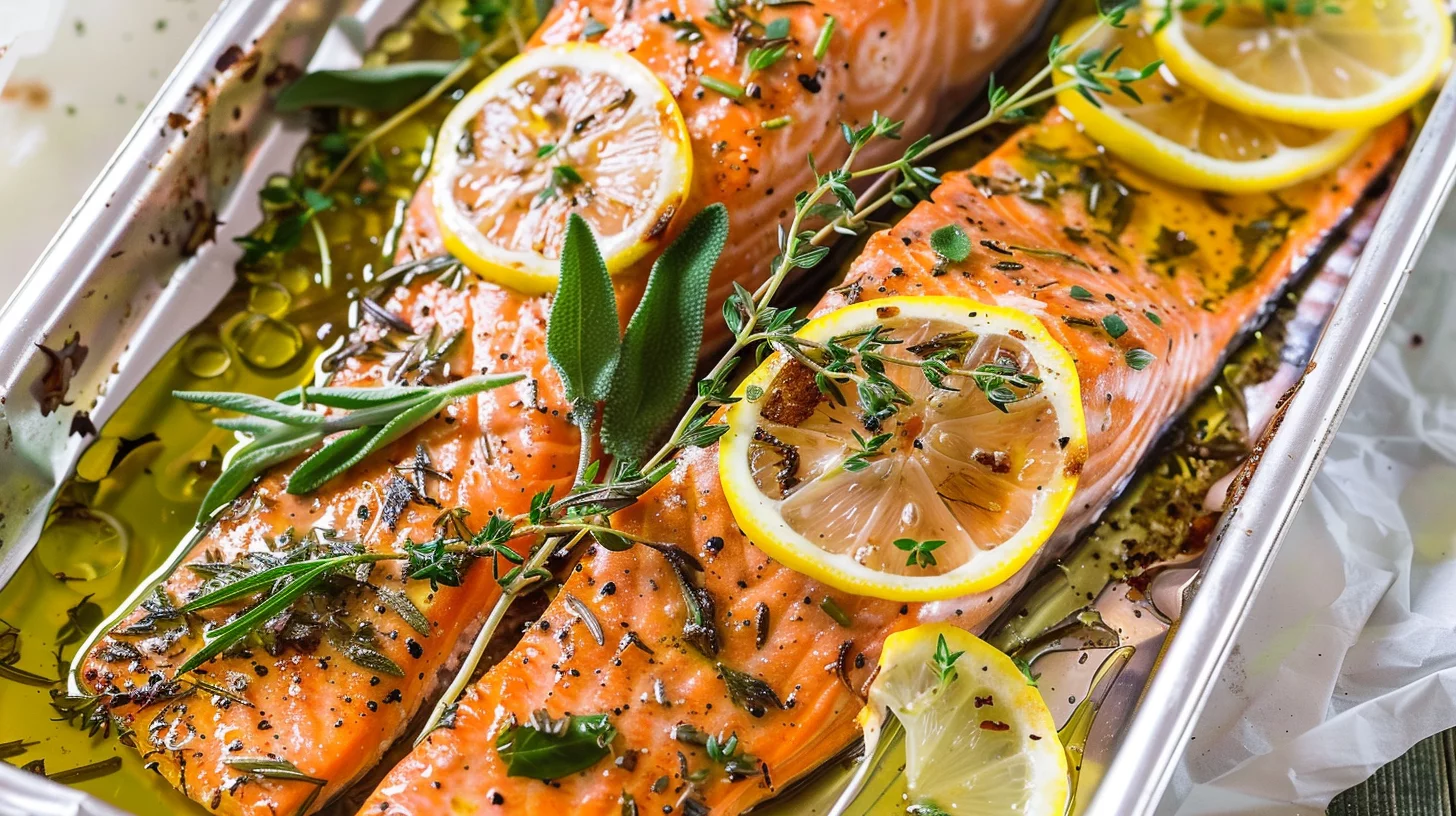
In the world of home-cooked meals, there’s something truly special about a baked salmon recipe. As someone who cherishes the simple pleasure of sharing a meal, I’ve always found solace in the aroma of herbs mingling with the freshness of salmon. It’s a dish that embodies warmth and nourishment, perfect for those who seek comfort in the everyday act of cooking.
Growing up, I remember gathering around the dinner table, the centerpiece often being a beautifully baked salmon, its flavors enhanced by fresh herbs and a squeeze of lemon. These moments were never about the grandeur of the meal but about the shared experience, the laughter, and the sense of community that a wholesome dish can inspire.
Creating a baked salmon recipe is more than just following steps; it’s about understanding the nuances of each ingredient, from the wild-caught salmon to the fresh rosemary that elevates its taste. This dish is a testament to how simple ingredients, when combined thoughtfully, can create a meal that’s both nourishing and delightful.
This recipe not only brings people together but also simplifies healthy eating, showing that flavorful, nourishing meals can fit effortlessly into our daily lives. Let’s dive into how you can prepare this comforting dish, perfect for any occasion.
Print
Baked Salmon Recipe
- Prep Time: 10 minutes
- Cook Time: 15 minutes
- Total Time: 25 minutes
- Yield: 4-6 servings
- Category: Main Course
- Method: Baking
- Cuisine: Française
Description
Delight in our easy baked salmon recipe, perfect for any occasion. Learn step-by-step how to achieve tender, flaky salmon every time. Elevate your dinner today!
Ingredients
- 2 pound (907 g) side of salmon boneless (skin on or off, depending upon your preference), wild caught if possible
- 5 sprigs fresh rosemary or fresh herbs of your choice; do not use dried herbs
- 2 small lemons divided , plus extra for serving as desired
- 2 tablespoon (30 ml) s extra virgin olive oil
- 1 teaspoon (5 ml) kosher salt
- 1/4 teaspoon (1 ml) ground black pepper
- 4 cloves garlic peeled and roughly chopped
- Additional chopped fresh herbs such as basil, thyme, parsley, dill, or green onion (optional )
Instructions
- Take the salmon out of the fridge and allow it to sit at room temperature for 10 minutes while you get the other components ready. Preheat your oven to 375 degrees F. Use a large piece of aluminum foil to cover a big baking dish or a rimmed baking tray.
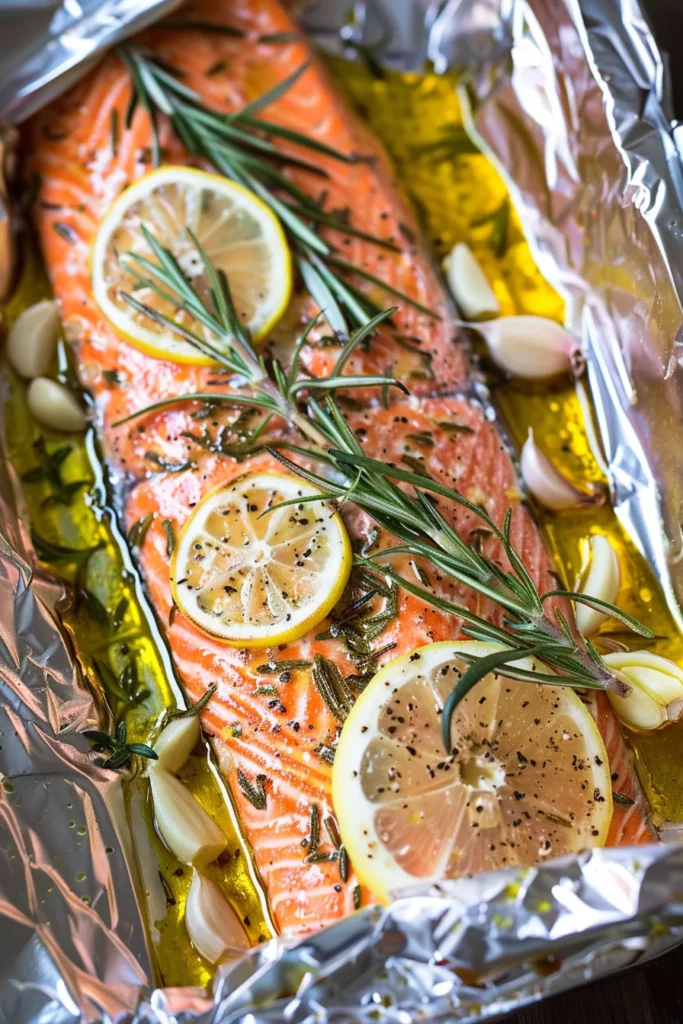
- Spray a light layer of cooking spray on the foil, then lay two rosemary sprigs down the center. Slice one lemon into thin rounds and place half of them alongside the rosemary. Position the salmon on top.
- Pour olive oil over the salmon and season with salt and pepper. Rub the seasoning in, then sprinkle the chopped garlic cloves over it. Place the remaining rosemary and lemon slices over the fish. Squeeze the juice from the second lemon and drizzle it over everything.
- Fold the edges of the foil over the salmon to create a sealed package. If the foil is too small, use another piece on top and fold the edges to enclose it completely. Make sure there’s a little space inside for air circulation.
- Cook the salmon in the oven for 15-20 minutes, until it’s nearly done at the thickest spot. Cooking time depends on the thickness of the salmon. If it’s about 1 inch thick, check a bit earlier to prevent overcooking. If thicker than 1 1/2 inches, it might need more time.
- Take the salmon out of the oven and carefully unwrap the foil to expose the top (watch out for steam). Set the oven to broil, put the fish back in, and broil for 3 minutes until the surface and garlic are lightly browned and fully cooked. Keep a close eye to avoid overcooking or burning the garlic. If the salmon still seems underdone, cover it again with the foil and let it sit briefly. Don’t wait too long, as it can quickly go from “not done” to “overdone.” It’s ready once it flakes easily with a fork.
- Slice the salmon into serving sizes. Garnish with more fresh herbs or an extra squeeze of lemon if preferred.
Notes
- Roll lemons on the counter before slicing to release juice and enhance citrus flavor.nMince garlic for a consistent flavor in each bite of salmon.nLet salmon reach room temperature for even cooking and improved texture.
Baked Salmon Recipe Basics
Fundamentals
Baked salmon is a versatile and easy-to-make dish that can be the star of any meal. The key to a great baked salmon recipe lies in selecting the freshest ingredients. Opt for a 2-pound side of salmon, preferably wild-caught, for the best flavor and texture. Fresh herbs like rosemary add an aromatic depth that complements the fish beautifully.
Lemon is another crucial element, offering a bright, citrusy note that balances the richness of the salmon. Olive oil, salt, and pepper are essential for seasoning, while garlic infuses the dish with a savory warmth. Together, these ingredients create a harmony of flavors that elevate the baked salmon to a delightful culinary experience.
Preparation/setup
Begin by taking the salmon out of the fridge and allowing it to sit at room temperature for about 10 minutes. This step ensures even cooking. Preheat your oven to 375 degrees F, and prepare a large baking dish or a rimmed tray by covering it with aluminum foil. Lightly spray the foil with cooking spray to prevent sticking.
Arrange two sprigs of fresh rosemary down the center of the foil, and layer half of the lemon slices alongside. Place the salmon on top, ready to be seasoned. Pour olive oil over the fish, then rub in the kosher salt and ground black pepper. Sprinkle the chopped garlic cloves over the salmon, adding the remaining rosemary and lemon slices on top. Finally, squeeze the juice from the second lemon over everything, ensuring the salmon is well-coated.
Mastering the Art of Baked Salmon
Technique
Creating the perfect baked salmon recipe requires a balance of technique and timing. Folding the edges of the foil over the salmon to create a sealed package is essential. This method ensures the salmon steams in its own juices, enhancing its flavor and keeping it moist. Make sure there’s a little space inside the foil for air circulation to achieve the best results.
Cook the salmon in the preheated oven for 15–20 minutes, depending on its thickness. A 1-inch thick salmon might require closer to 15 minutes, while a piece thicker than 1 1/2 inches could need more time. The key is to avoid overcooking, as salmon can quickly go from perfectly cooked to dry.
Baked Salmon Recipe
Tips/tricks
For an extra touch of flavor, consider adding additional chopped fresh herbs such as basil, thyme, or dill. These herbs can be sprinkled over the salmon before sealing the foil. If you’re looking to pair this dish with a side, consider serving it with Crispy Baked Eggplant Rounds or a High-Protein Zucchini Casserole, which complement the flavors beautifully.
Once the initial baking is complete, carefully unwrap the foil to expose the top of the salmon. Set the oven to broil and return the salmon for an additional 3 minutes. This step allows the garlic to become lightly browned and enhances the overall presentation of the dish. Keep a close eye to prevent burning.
Achieving Salmon Perfection
Perfecting results
The perfect baked salmon recipe results in a fish that flakes easily with a fork and has a tender, moist texture. If the salmon still seems underdone after broiling, cover it again with foil and let it sit briefly. This resting period allows the carryover heat to finish cooking the salmon without drying it out.
For those who wish to experiment with flavors, consider trying variations with different herbs or citrus fruits. Oranges can be a delightful alternative to lemons, adding a subtle sweetness to the dish. Each variation brings a unique twist, making this recipe adaptable to personal preferences.
Troubleshooting/variations
If you encounter any issues, such as the salmon sticking to the foil, ensure that the cooking spray is applied evenly, or try using parchment paper. For a spicier kick, sprinkle a pinch of red pepper flakes over the salmon before baking. This addition can enhance the flavor profile, making the meal even more exciting.
Should you wish to explore more salmon recipes, check out this Orange Glazed Salmon for a different take that you might enjoy. There’s always room for creativity in the kitchen, allowing you to tailor the meal to your taste.
Serving Your Baked Salmon
Serving/presentation
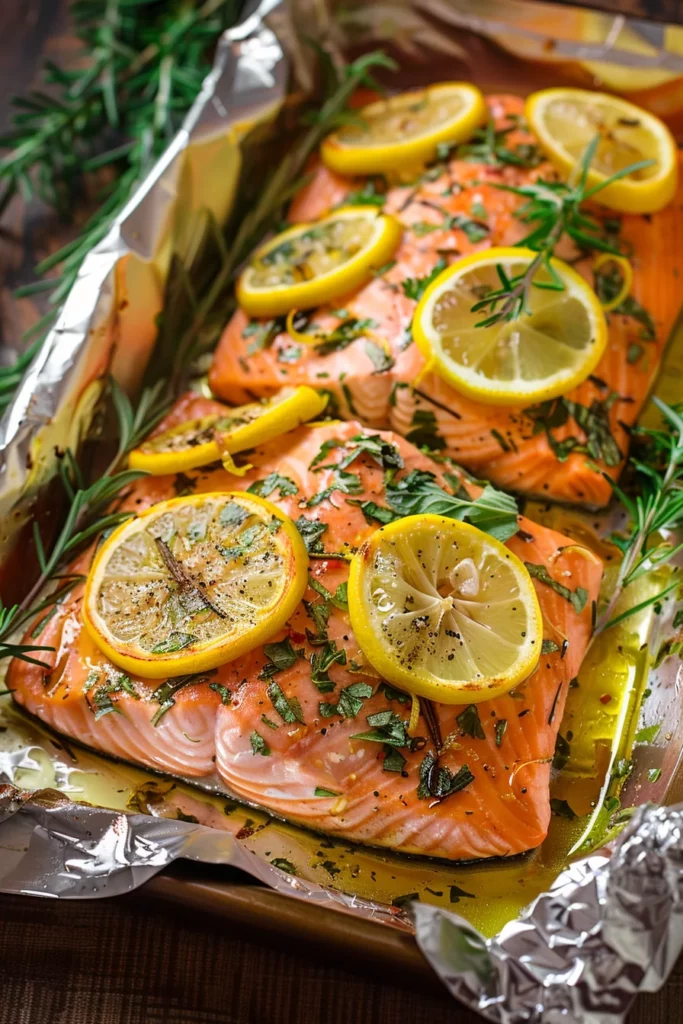
When it comes to serving your baked salmon recipe, presentation matters. Slice the salmon into serving-sized portions and arrange them on a platter. Garnish with additional fresh herbs or an extra squeeze of lemon for a touch of color and flavor. This simple yet elegant presentation invites everyone to enjoy the meal.
To complete the dining experience, consider pairing the salmon with a refreshing beverage like Pineapple Lemonade. The citrusy notes complement the flavors of the salmon beautifully, enhancing every bite.
Pairings/storage
For side dishes, options like Cheesy Baked Zucchini Rounds or Cheesy Baked Asparagus Spears are excellent choices that add variety and nutrition to the meal. Store any leftover salmon in an airtight container in the refrigerator for up to two days to maintain its freshness.
Baked Salmon Recipe
If you’re looking to expand your culinary horizons, consider exploring dishes like Oven Baked Cabbage Burgers or experimenting with Sous Vide Steak Sirloin for a diverse range of flavors and techniques.
Conclusion
This baked salmon recipe showcases how simple ingredients can come together to create a meal that’s both delicious and nutritious. With the right techniques and a few helpful tips, you can achieve a dish that’s perfectly cooked and full of flavor.
Whether you’re cooking for yourself or sharing with loved ones, this recipe offers a straightforward approach to healthy eating that doesn’t compromise on taste. Its adaptability makes it suitable for any occasion, ensuring that you can enjoy a wholesome meal anytime.
By embracing the fundamentals and experimenting with variations, you open the door to a world of culinary possibilities, creating moments that matter around the dinner table. Enjoy the journey of cooking and savor every bite.