
📑 Table of Contents ▶
- Thai Peanut Sweet Potato Buddha Bowl
- The Art of Crafting a Thai Peanut Sweet Potato Buddha Bowl
- Fundamentals
- Preparation/setup
- Mastering the Thai Peanut Sweet Potato Buddha Bowl
- Technique
- Tips/tricks
- Enhancing Your Thai Peanut Sweet Potato Buddha Bowl
- Perfecting results
- Troubleshooting/variations
- Serving Your Thai Peanut Sweet Potato Buddha Bowl
- Serving/presentation
- Pairings/storage
- Conclusion
- FAQs – Thai Peanut Sweet Potato Buddha Bowl
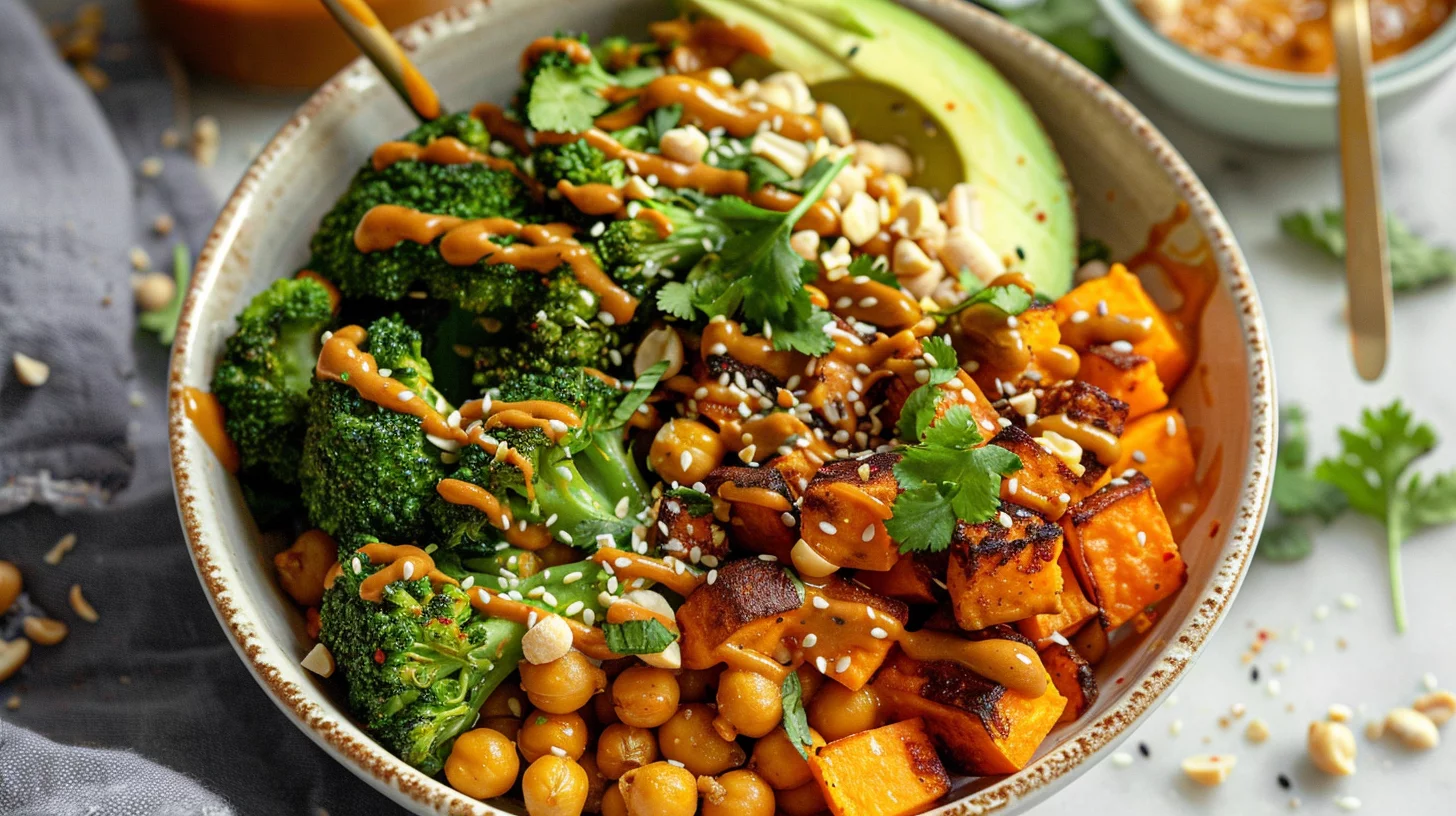
I’m Della Lucia, and my passion for cooking has always centered around creating dishes that not only nourish the body but also the soul. One of my favorite creations is the Thai Peanut Sweet Potato Buddha Bowl. This dish brings back memories of cozy evenings in the kitchen, where the aroma of roasted sweet potatoes mingled with the tangy scent of peanut sauce. It’s a recipe that perfectly captures the essence of healthy, flavorful eating without any fuss.
The Thai Peanut Sweet Potato Buddha Bowl is a delightful blend of textures and tastes, combining sweet potatoes with chickpeas and a medley of fresh vegetables. It’s a testament to how simple ingredients can come together to create something truly special. This dish is a go-to in my household, perfect for those busy weeknights when you crave something wholesome yet quick to prepare.
Cooking shouldn’t be a chore but a joyful experience, and this Buddha bowl does exactly that. It’s a meal that invites everyone to gather around the table, share stories, and enjoy the simplicity of good food. The flavors are rich yet balanced, making it a dish that resonates with both kids and adults alike. If you’re searching for a recipe that’s both comforting and nourishing, this Thai Peanut Sweet Potato Buddha Bowl is the answer.
Print
Thai Peanut Sweet Potato Buddha Bowl
- Prep Time: 15 minutes
- Cook Time: 35 minutes
- Total Time: 50 minutes
- Yield: 4 servings
- Category: Main Course
- Method: Baking, Steaming
- Cuisine: Asian
Description
Discover how to make a delicious Thai Peanut Sweet Potato Buddha Bowl that’s packed with flavor and nutrients. Perfect for a healthy and satisfying meal!
Ingredients
- – 4 cups (946 ml) peeled and cubed sweet potato (about 2 medium potatoes)
- – 1 can (240 g) chickpeas, drained and rinsed
- – 2 tablespoons (30 ml) oil (I used avocado)
- – 1 tablespoon (15 ml) soy sauce or tamari
- – 1 tablespoon (15 ml) maple syrup
- – 1-2 tablespoons (15-30 ml) sriracha, depending on spice preference
- – 2 teaspoons (10 ml) minced garlic
- – 1/2 teaspoon (3 ml) red pepper flakes
- – 1 cup (237 ml) uncooked grain of choice (I suggest quinoa, rice, or millet)
- – 1 head broccoli, chopped
- – 1 1/2 cups (355 ml) shelled edamame
- – 1 avocado
- – 1/2 batch peanut sauce*click for recipe
- – 1/2 cup (120 ml) chopped peanuts
- – 1/2 cup (120 ml) chopped cilantro
Instructions
- Set your oven to 400°F and let it warm up.
- Combine the sweet potato cubes and chickpeas in a mixing bowl, ensuring they are evenly coated with the spices and seasonings.
- Spread them out on a baking tray covered with parchment paper and place in the oven for 30-35 minutes, or until the potatoes are tender enough to pierce with a fork.
- Prepare your chosen grain by following the instructions on its packaging. You can use vegetable broth instead of water for added flavor.
- While the potatoes and chickpeas are baking, steam the edamame and broccoli in a pot with about an inch of water for 5-7 minutes, or until the broccoli is slightly tender. Remove any remaining water.
- Once the baking is complete, start assembling your bowls. Begin with the grain at the bottom, then layer on the steamed vegetables, the sweet potato and chickpeas, slices of avocado, and finish with a generous drizzle of peanut sauce, a sprinkle of chopped cilantro, and crushed peanuts. For an extra kick, add some red pepper flakes!
Notes
- For a richer flavor, try using roasted chickpeas instead of canned ones.
- Experiment with alternative grains like farro or barley for a unique twist.
- Enhance the dish with a splash of lime juice for a citrusy kick.
The Art of Crafting a Thai Peanut Sweet Potato Buddha Bowl
Fundamentals
Creating a Thai Peanut Sweet Potato Buddha Bowl begins with understanding the harmony of its ingredients. Sweet potatoes are the star, providing a natural sweetness that pairs beautifully with the savory components like chickpeas and soy sauce. The choice of grain, whether quinoa, rice, or millet, acts as a sturdy base, absorbing the flavors and adding a satisfying texture.
Each ingredient in this Buddha bowl plays a crucial role. Chickpeas add protein and a delightful crunch after roasting, while broccoli and edamame contribute essential nutrients and a vibrant green hue. The avocado offers a creamy contrast, enhancing the bowl’s overall richness. The final touch is the peanut sauce, tying everything together with its nutty, slightly spicy profile.
Preparation/setup
Begin by preheating your oven to 400°F. This step ensures that your sweet potatoes and chickpeas roast to perfection, achieving that tender yet crispy texture. Once the oven is ready, combine the sweet potato cubes and chickpeas in a bowl, tossing them with oil, soy sauce, maple syrup, sriracha, garlic, and red pepper flakes. Spread them onto a parchment-lined baking tray for even cooking.
While the sweet potatoes and chickpeas are roasting, take the time to prepare your chosen grain according to its package instructions. For an added depth of flavor, consider cooking the grain in vegetable broth instead of water. In parallel, steam the broccoli and edamame until the broccoli turns a vivid green and becomes slightly tender. This multitasking approach makes efficient use of your time, ensuring the entire meal comes together seamlessly.
Mastering the Thai Peanut Sweet Potato Buddha Bowl
Technique
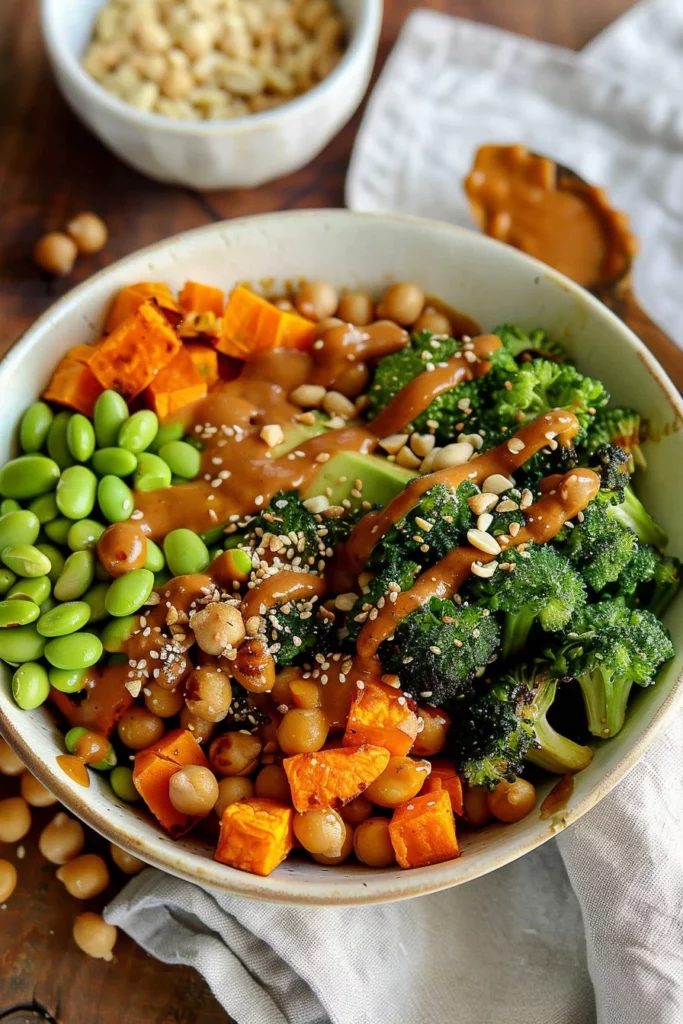
The key to mastering the Thai Peanut Sweet Potato Buddha Bowl lies in the roasting process. Ensuring that the sweet potatoes and chickpeas are evenly coated with the spice mixture is crucial. This step guarantees that every bite is flavorful and perfectly seasoned. Spread them out on the tray in a single layer to promote even roasting and maximum caramelization.
Another important technique is the steaming of vegetables. Using just an inch of water in a pot, cover and steam the broccoli and edamame until the broccoli is slightly tender. This method preserves their vibrant color and crunch, adding a fresh contrast to the roasted components.
Thai Peanut Sweet Potato Buddha Bowl
Tips/tricks
For those who enjoy a bit more heat, consider adding extra sriracha to the sweet potato and chickpea mixture. Adjust the amount based on your spice preference. If you’re looking for a gluten-free alternative, swap soy sauce for tamari. For an extra boost of flavor, lightly toast the chopped peanuts before sprinkling them over the assembled bowl.
When preparing the peanut sauce, aim for a consistency that is thick enough to cling to the ingredients but still pourable. If the sauce is too thick, thin it out with a bit of water or lime juice. This balance ensures that the sauce enhances without overwhelming the other flavors in the bowl.
Enhancing Your Thai Peanut Sweet Potato Buddha Bowl
Perfecting results
To perfect your Thai Peanut Sweet Potato Buddha Bowl, focus on the layering technique. Start with a generous scoop of your chosen grain, providing a solid foundation. Next, add the steamed broccoli and edamame, followed by the roasted sweet potatoes and chickpeas. This order ensures that each ingredient is highlighted and maintains its unique characteristics.
A well-balanced Buddha bowl is all about texture and flavor contrast. The creamy avocado slices should be the penultimate layer, providing a smooth and rich mouthfeel. Finally, drizzle the peanut sauce generously, allowing it to cascade over the ingredients, and finish with a sprinkle of fresh cilantro and crushed peanuts for a delightful crunch.
Troubleshooting/variations
If you encounter any issues with the sweet potatoes not cooking evenly, consider cutting them into smaller, uniform pieces. This adjustment helps them roast more consistently. If the chickpeas are not as crispy as desired, extend the roasting time by a few minutes, checking frequently to avoid burning.
For those looking to experiment, try adding roasted red peppers or sliced radishes for additional flavor and color. You can also substitute the avocado with a dollop of hummus for a different creamy element.
Serving Your Thai Peanut Sweet Potato Buddha Bowl
Serving/presentation
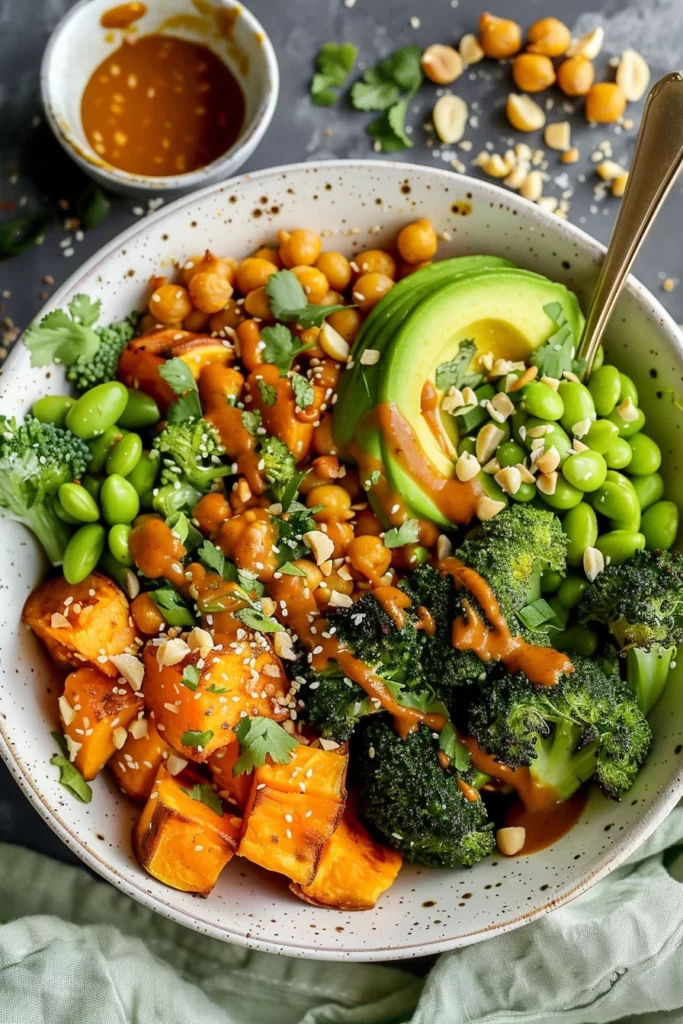
Present your Thai Peanut Sweet Potato Buddha Bowl with an eye for detail. Use a shallow, wide bowl to showcase the vibrant colors and textures of the ingredients. Arrange each component in neat sections, allowing diners to see the individual elements and appreciate their distinct flavors.
Consider serving the peanut sauce on the side, allowing each person to customize the amount according to their preference. This approach not only enhances the dining experience but also accommodates varying tastes and dietary restrictions.
Thai Peanut Sweet Potato Buddha Bowl
Pairings/storage
For a refreshing complement to the hearty flavors of the Buddha bowl, consider serving it with a light, crisp side salad. Use fresh greens, a squeeze of lemon juice, and a sprinkle of sesame seeds to enhance the meal’s overall appeal.
Store any leftovers in an airtight container in the refrigerator for up to three days. To maintain the integrity of the ingredients, keep the peanut sauce separate until ready to serve. This simple step preserves the freshness and ensures that each serving tastes as delicious as the first.
Conclusion
The Thai Peanut Sweet Potato Buddha Bowl stands out as a versatile and nourishing meal that fits seamlessly into any lifestyle. Its blend of flavors and textures creates a dish that is both satisfying and delightful to the senses. Perfect for busy weeknights or leisurely weekend dinners, this Buddha bowl is a testament to the power of simple, wholesome ingredients.
Whether you’re making it for the first time or it’s a staple in your kitchen, this recipe is sure to impress. Its adaptability allows for endless variations, making it a dish that evolves with your taste and preferences. Enjoy the process of creating something that not only tastes amazing but also brings a sense of warmth and community to your table.