
📑 Table of Contents ▶
- Roasted Veggie and Chickpea Bowls
- Roasted Veggie and Chickpea Bowls: A Delightful Exploration
- Fundamentals
- Preparation/setup
- Mastering the Roasting Technique
- Technique
- Tips/tricks
- Perfecting Roasted Veggie and Chickpea Bowls
- Perfecting results
- Troubleshooting/variations
- Serving and Enjoying Your Creation
- Serving/presentation
- Pairings/storage
- Conclusion
- FAQs – Roasted Veggie and Chickpea Bowls
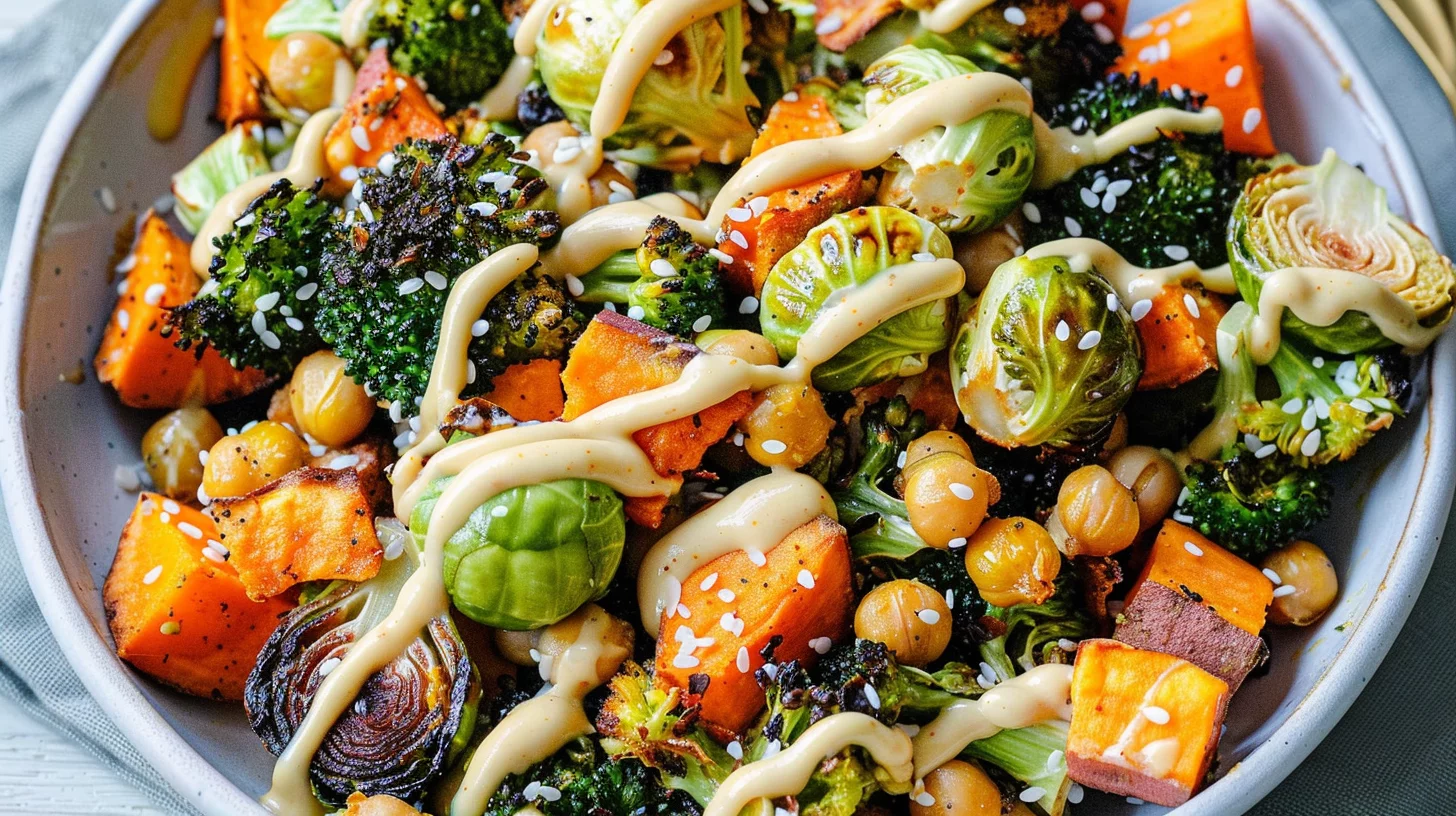
I’m Della Lucia, and I’ve always believed that a home is built on the simple moments shared over good food. Not walls or grand occasions, but everyday meals, warm conversations, and the comfort of cooking something with care. One of my fondest memories is of making Roasted Veggie and Chickpea Bowls with loved ones, a dish that embodies my philosophy of nourishment and connection.
HealthyDinnerMeals grew from my love for nourishing recipes that bring people together. My fondest memories aren’t tied to extravagant dishes but to quiet moments: a homemade meal, a pot simmering on the stove, and the joy of sharing something simple and delicious. The Roasted Veggie and Chickpea Bowls serve as the perfect example of this simplicity, combining hearty vegetables with wholesome flavors.
Life gets busy, but healthy eating shouldn’t feel complicated or overwhelming. That’s why I focus on real, approachable recipes — meals that balance flavor and nourishment and fit seamlessly into everyday routines. These bowls, with their vibrant mix of broccoli, Brussels sprouts, sweet potatoes, and chickpeas, are a testament to this approach.
You won’t find strict rules or trendy extremes here. Just wholesome, satisfying recipes — from quick dinners and fresh salads to light desserts — designed to help you cook with confidence and enjoy the process. I hope these Roasted Veggie and Chickpea Bowls bring inspiration, ease, and joy to your kitchen because cooking isn’t about perfection, it’s about creating moments that matter, one meal at a time.
Print
Roasted Veggie and Chickpea Bowls
- Prep Time: 15 minutes
- Cook Time: 25 minutes
- Total Time: 40 minutes
- Yield: 4 servings
- Category: Main Course
- Method: Baking
- Cuisine: N/A
Description
Discover how to create delicious Roasted Veggie and Chickpea Bowls at home with this easy recipe. Perfect for a healthy and satisfying meal!
Ingredients
- – 2 cups (480 ml) broccoli florets
- – 2 cups (480 ml) Brussels sprouts, halved
- – 1 medium-large sweet potato, cut into 1-inch pieces (about 2 cups)
- – 15 ounces (425 g) chickpeas, canned, drained and rinsed
- – Drizzle of olive oil or lemon juice
- – Dash of garlic powder
- – Salt and freshly ground black pepper to taste
- – 1/4 cup (60 ml) beef mustard
- – 1/2 cup (120 ml) tahini
- – 1/3 cup (80 ml) water
- – 1/4 cup (60 ml) apple cider vinegar
- – 2 tablespoons date syrup or maple syrup (or to taste)
- – 2 tablespoons (30 ml) lemon juice
- – Salt and freshly ground black pepper to taste
Instructions
- ▢ Start by setting your oven to 400°F to warm up.
- ▢ Prepare a spacious baking tray by covering it with parchment or opting for a non-stick option. Put it aside for now.
- ▢ Flavor the vegetables: In a medium bowl, combine the broccoli, halved Brussels sprouts, sweet potato chunks, and chickpeas. Lightly coat them with olive oil or lemon juice to give them a shiny appearance. Sprinkle on garlic powder, salt, and fresh black pepper. Use your hands to evenly distribute the oil and spices over the veggies.
- ▢ Bake: Place the seasoned vegetables onto the baking tray. Let them bake for 15 minutes, then give them a quick toss. Continue baking for another 5 minutes or until the sweet potato is just soft enough. Switch the oven to broil mode and cook for an additional 2 minutes, aiming for a slight charring on the Brussels sprouts. Move the roasted vegetables into a large bowl once done.
- ▢ Prepare the dressing: In a medium bowl, mix together the beef mustard, tahini, water, apple cider vinegar, date syrup, and lemon juice until well-blended. Taste and tweak the mustard, syrup, and water if needed. Add some salt and freshly ground black pepper to enhance the flavor.
- ▢ To serve: Pour your desired amount of dressing over the roasted vegetables and mix to ensure they’re well-coated.
Notes
- Adjust the tahini or water amount for a creamier dressing texture.
- Enhance the dressing with parsley or dill for added flavor.
- Experiment with vinegar or balsamic vinegar for a different dressing taste.
Roasted Veggie and Chickpea Bowls: A Delightful Exploration
Fundamentals
Creating the perfect Roasted Veggie and Chickpea Bowls begins with selecting fresh, vibrant vegetables. The broccoli florets, Brussels sprouts, and sweet potatoes, when roasted, develop a rich depth of flavor that pairs beautifully with the creamy chickpeas. The key is to choose ingredients that are at their peak, ensuring that each bite is packed with nutrition and taste.
These bowls are not just about the vegetables. The dressing, a blend of beef mustard, tahini, apple cider vinegar, and a hint of sweetness from date syrup, ties everything together. This harmonious combination creates a savory, tangy, and slightly sweet profile that elevates the dish to something truly special.
Preparation/setup
To start, preheat your oven to 400°F, setting the stage for the perfect roast. Line a baking sheet with parchment paper to prevent sticking and facilitate easy cleanup. In a medium bowl, toss the broccoli, Brussels sprouts, sweet potato pieces, and chickpeas with a drizzle of olive oil, garlic powder, salt, and black pepper. Ensuring each piece is well-coated will help in achieving that signature roasted flavor.
Spread the seasoned vegetables evenly on the prepared baking sheet. This ensures even roasting and allows each vegetable to develop its unique caramelization. A quick toss halfway through the roasting process helps in achieving a uniform texture, especially for the sweet potatoes, which should be tender but not mushy.
Mastering the Roasting Technique
Technique
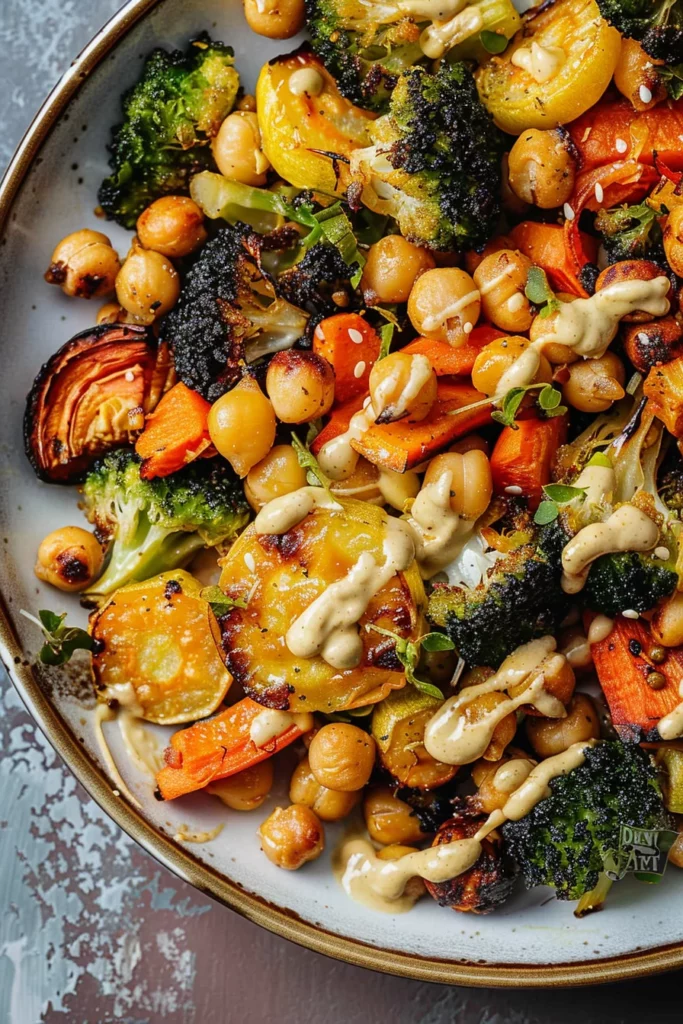
The roasting process is where the magic happens. After placing the vegetables in the oven, the goal is to achieve a balance between tenderness and caramelization. Start by roasting for 15 minutes; then, toss the vegetables to ensure even cooking. Continue roasting for another 5 minutes, checking the sweet potatoes for tenderness.
Roasted Veggie and Chickpea Bowls
Switch the oven to broil mode for the final 2 minutes. This step is crucial for adding a slight char to the Brussels sprouts, enhancing their natural sweetness and adding a delightful crunch. Keep a close eye during this step to prevent over-charring, which can lead to bitterness.
Tips/tricks
For the best results, ensure your vegetables are spaced out on the baking sheet. Crowding them can lead to steaming rather than roasting, resulting in a mushy texture. Adjust your seasonings to taste; a dash more garlic powder or an extra sprinkle of salt can make a world of difference in flavor.
Experiment with different olive oil or lemon juice for added depth. Both options offer unique flavor profiles that complement the roasted vegetables beautifully. Lemon juice adds a zesty brightness, while olive oil imparts a rich, fruity undertone.
Perfecting Roasted Veggie and Chickpea Bowls
Perfecting results
Once the vegetables are perfectly roasted, the next step is to prepare the dressing. In a medium bowl, whisk together the beef mustard, tahini, water, apple cider vinegar, date syrup, and lemon juice. This dressing should be smooth and well-blended, with a balance of acidity and sweetness that complements the roasted flavors.
Taste and adjust the dressing to your preference. A little more mustard can add a sharper kick, while additional syrup can enhance the sweetness. The key is to create a dressing that enhances the natural flavors of the vegetables without overpowering them.
Troubleshooting/variations
If your vegetables are not roasting as expected, check for oven temperature accuracy. An oven thermometer can help ensure you’re roasting at the right temperature. If the dressing seems too thick, adjust by adding small increments of water until the desired consistency is achieved.
For variations, consider adding different spices or herbs to the mix. A sprinkle of smoked paprika or a handful of fresh parsley can add a new dimension to the dish. Each variation offers a unique twist while maintaining the essence of the original recipe.
Serving and Enjoying Your Creation
Serving/presentation
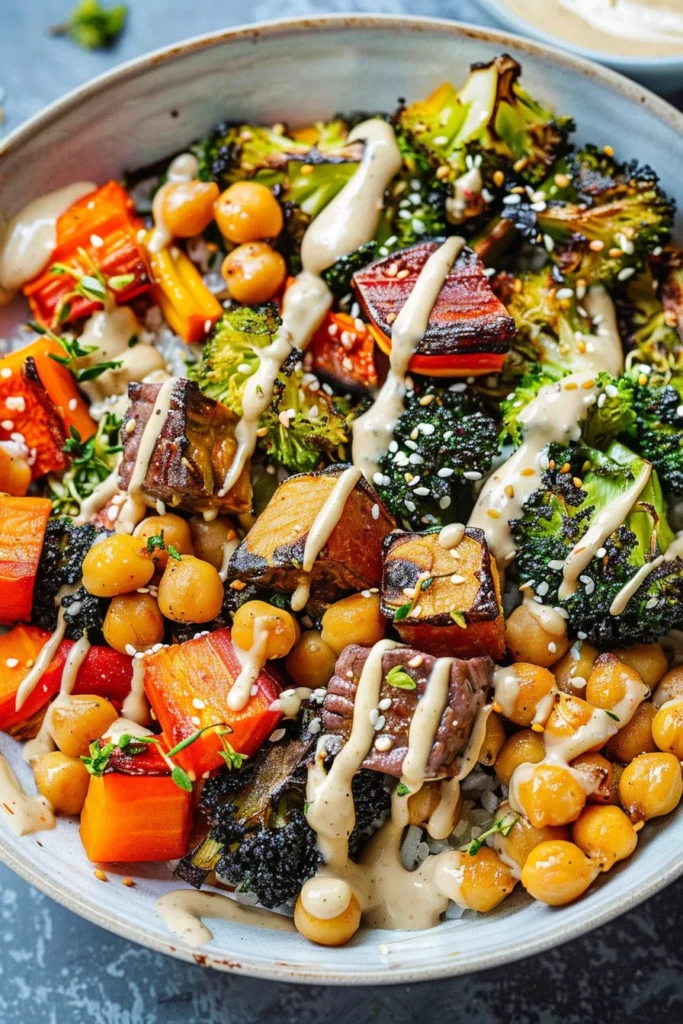
To serve, arrange the roasted vegetables in a large bowl, then pour the desired amount of dressing over the top. Toss gently to ensure an even coating. Presentation matters, so consider garnishing with a sprinkle of freshly ground black pepper or a drizzle of extra olive oil for an appealing finish.
These Roasted Veggie and Chickpea Bowls are not just a meal but an experience to be savored. Each bite offers a combination of textures and flavors, making it a delightful dish for any occasion.
Roasted Veggie and Chickpea Bowls
Pairings/storage
This dish pairs wonderfully with a simple green salad or a light grain like quinoa, complementing the roasted flavors without overwhelming them. For storage, keep any leftovers in an airtight container in the refrigerator for up to three days. The flavors will continue to meld, making the leftovers just as enjoyable as the initial dish.
For more meal ideas, explore Roasted Veggie Melts with Ricotta and Marinara for another take on roasted vegetables. The possibilities are endless when you start with fresh ingredients and a little creativity.
Conclusion
The Roasted Veggie and Chickpea Bowls offer a satisfying and nutritious meal option that proves healthy eating can be simple and delicious. With the right technique and ingredients, you can create a dish that delights the senses and nourishes the body. The combination of roasted vegetables and a rich, tangy dressing makes this bowl a versatile addition to any meal plan.
From the preparation to the final presentation, every step in making these bowls is an opportunity to embrace the joy of cooking. Whether enjoyed as a main course or a side, these bowls provide a hearty, balanced meal that fits seamlessly into any diet. The utility of this dish lies in its simplicity and adaptability, making it a staple in any kitchen.