
📑 Table of Contents ▶
Easy Kimchi Recipe
I’m Della Lucia, and HealthyDinnerMeals was created from my belief that food should nourish both the body and the moments we share. My fondest memories come from simple homemade meals — not perfection, just comfort, connection, and care. Here, healthy eating stays approachable and satisfying, with recipes that fit real life: quick, flavorful, and balanced. Whether you’re cooking for yourself or loved ones, I hope these meals help you feel confident in the kitchen and inspired to enjoy every moment around the table.
Kimchi holds a special place in my heart. Growing up, I watched my grandmother turn simple ingredients into a symphony of flavors. The crunch of the napa cabbage and the robust spices captivated me from the first bite. Making kimchi became a cherished family tradition, bridging generations while infusing our kitchen with an unforgettable aroma. Today, I want to share my easy kimchi recipe with you.
Embracing this art at home allows you to craft flavors suited to your palate. The beauty of this recipe lies not just in its deliciousness but in its communal aspect. Gather your loved ones and dive into this hands-on experience.
Part 1 — Kimchi Fundamentals
Fundamentals
Kimchi serves as a culinary staple in many Asian households. This fermented dish, with roots in Korea, provides a delightful balance of flavors and health benefits. Napa cabbage takes center stage in this easy kimchi recipe. The natural crunch helps capture the essence of the spices, creating a satisfying experience.
Fermentation magic unfolds after you leave the mixture to sit. As it transforms, it develops a depth of flavor that excites the taste buds. This easy kimchi recipe provides an approachable introduction to the world of homemade fermentations.
Preparation/setup
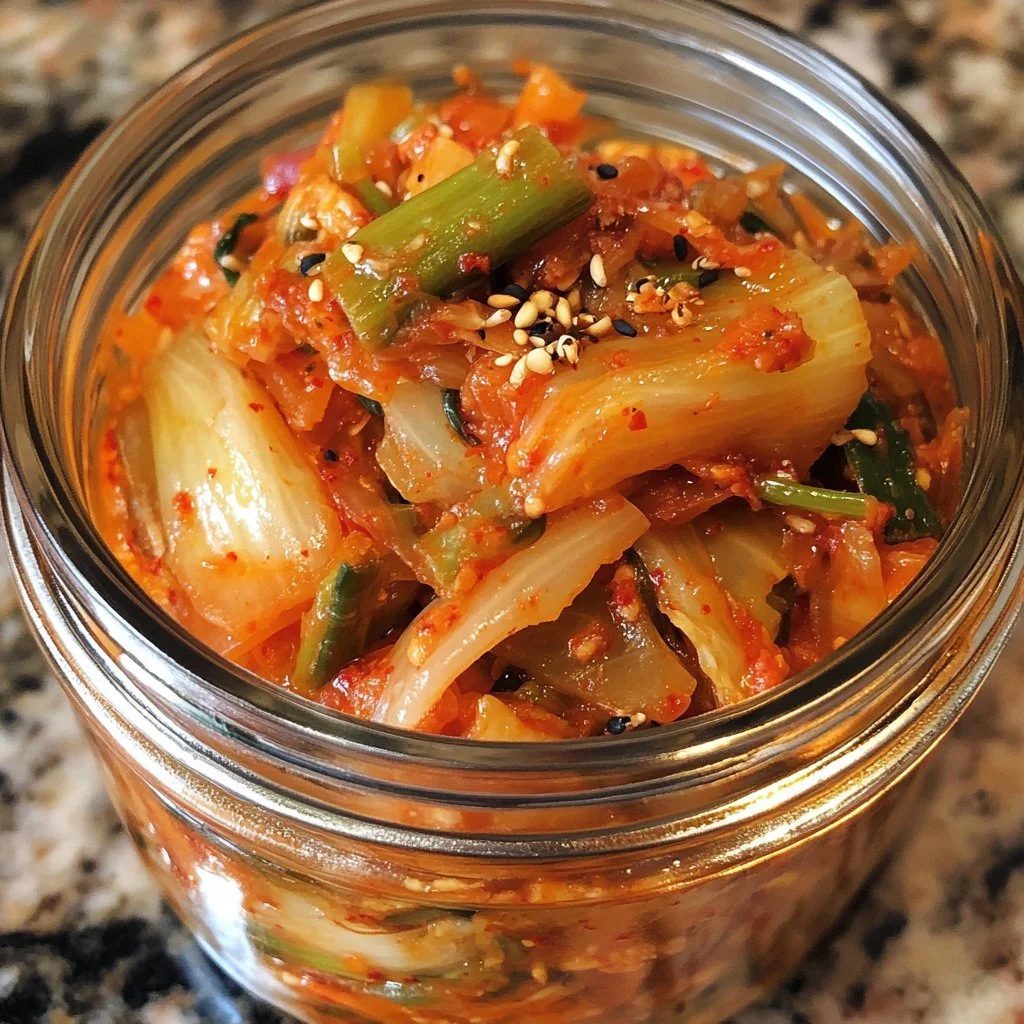
Start by preparing your workspace. Gather your ingredients before diving into the recipe. You’ll need a clean jar to store your finished kimchi. It’s essential to maintain cleanliness to foster a healthy fermentation process.
Ensure all utensils and cutting boards are sanitized. This step reduces the risk of unwanted bacteria, granting your kimchi a safe and delightful fermentation journey.
Ingredients
To whip up this easy kimchi recipe, gather your ingredients:
- 1 medium head of napa cabbage
- 1/4 cup of iodine-free sea salt or kosher salt
- Distilled or filtered water
- 1 tablespoon of grated garlic
- 1 teaspoon of grated fresh ginger
- 1 teaspoon of granulated sugar
- 2 tablespoons of fish sauce or salted shrimp paste
- 1 to 5 tablespoons of Korean red pepper flakes (gochugaru)
- 8 ounces of Korean radish or daikon radish
- 4 medium scallions (cut into 1-inch pieces)
Directions
- Cut the napa cabbage into quarters and sprinkle it with salt. Let it sit in a colander for 1 to 2 hours.
- Rinse and drain the salted cabbage thoroughly.
- In a mixing bowl, combine grated garlic, grated ginger, granulated sugar, fish sauce or salted shrimp paste, and gochugaru to create a paste. Adjust the spice level to suit your taste.
- Slice the Korean or daikon radish into thin strips and add them to the bowl with scallions.
- Mix everything gently to combine the ingredients, ensuring even distribution of flavors.
- Pack the mixture tightly into a clean jar, leaving space at the top for fermentation.
- Seal the jar and let it ferment at room temperature for 1 to 5 days, tasting daily to check the flavor.
- Once ready, store the kimchi in the refrigerator.
Part 2 — Mastering Kimchi Technique
Technique
Making kimchi requires a blend of technique and artistry. The process of salting the cabbage initiates the fermentation, drawing out moisture and enhancing the overall crunchiness.
Proper mixing of the spice paste transforms the vegetables. Each component contributes uniquely to the final flavors. Gochugaru adds heat, while fish sauce provides umami depth, creating a harmonious blend.
Tips/tricks
When preparing your easy kimchi recipe, remember a few essential tips. Adjust the spice levels based on your preference. Start with one tablespoon of gochugaru, and add more if you enjoy a spicier kick.
Enjoying kimchi is not just about following the recipe. Embrace the creative aspect by experimenting with additional ingredients like carrots or other vegetables. Personalizing your kimchi can lead to surprising and delightful results.
Part 3 — Perfecting Kimchi Results
Perfecting results
Achieving the perfect balance of flavors in your easy kimchi recipe requires attention and patience. The combination of spices, combined with the natural fermentation process, takes time. Daily tasting allows you to track the development and ensure it meets your flavor desires.
Do not rush the fermentation process. Each day enhances the taste, allowing the ingredients to meld beautifully.
Troubleshooting/variations
If your kimchi ends up too salty, rinsing the cabbage more thoroughly may help. Always taste at various stages and make adjustments for future batches.
You can also experiment with different types of pepper flakes. Substitute gochugaru with other chili powders to create a unique flavor profile.
Part 4 — Presenting Your Kimchi
Serving/presentation
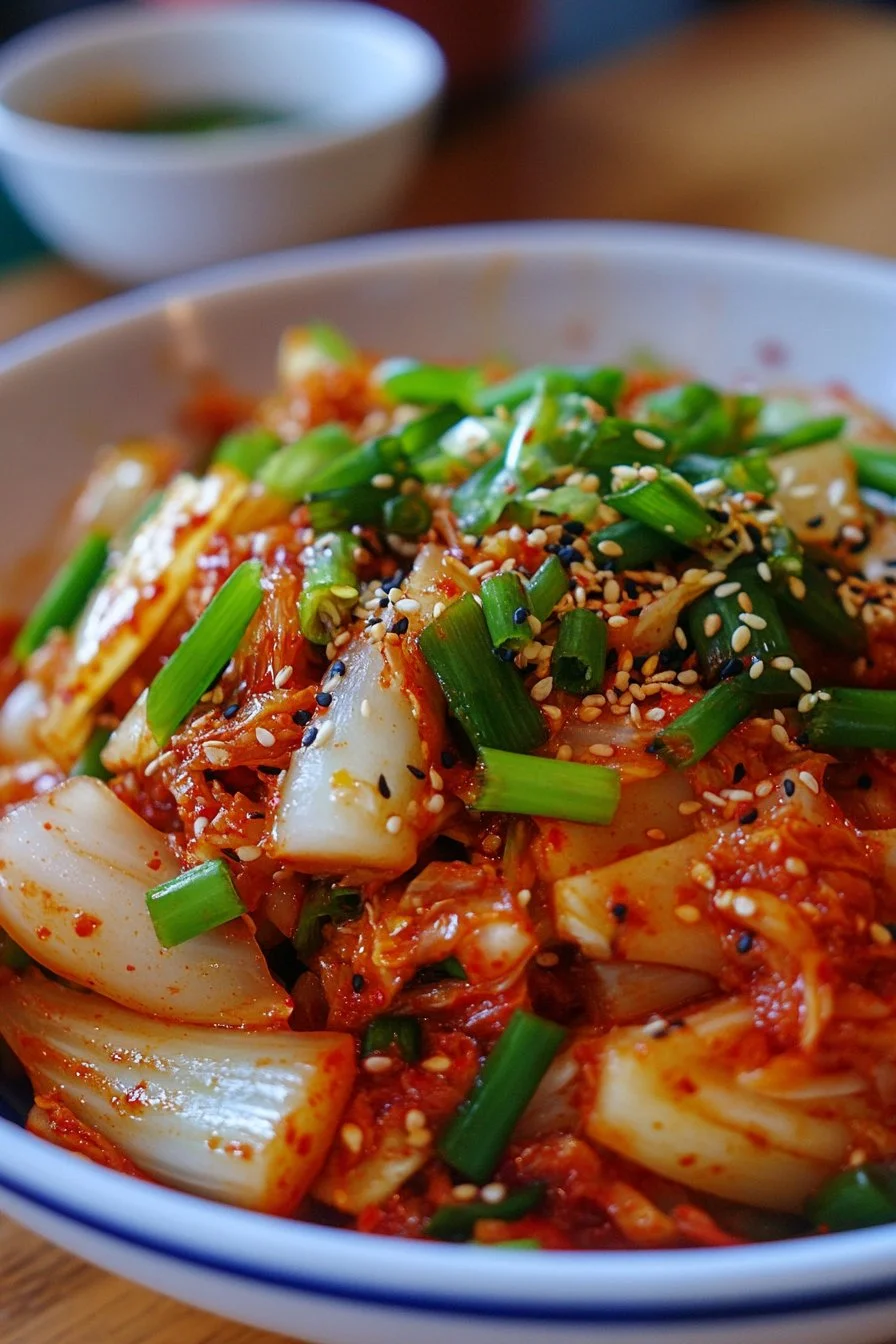
Presentation elevates your easy kimchi recipe. Use a beautiful serving bowl to showcase your vibrant creation. The mixture of colors and textures adds an inviting element to your meal.
Serve kimchi as a side dish or mix it into various dishes for an extra flavor punch. Incorporate it into rice bowls, tacos, or salads.
Pairings/storage
Kimchi enhances myriad meals. Pair your kimchi with grains or protein-based dishes for a nutritious boost. Store it in the refrigerator to maintain its crispness and flavors.
Ensure your jar is tightly sealed to keep the kimchi fresh. The flavors will continue to develop in the fridge, creating a delightful condiment ready to enhance your next meal.
Conclusion
Kimchi is much more than a side dish; it’s a delightful exploration of flavor that builds connections around the table. The easy kimchi recipe offers a hands-on experience filled with personalization and experimentation. Embrace the journey of making this beloved dish at home, and enjoy the shared moments it creates.
Print
Easy Kimchi Recipe
- Prep Time: 15 minutes
- Cook Time: 0 minutes
- Total Time: 0 minutes
- Yield: 4 servings
- Category: Side Dish
- Method: Fermentation
- Cuisine: Korean
- Diet: Vegan
Description
A simple and delicious kimchi recipe that infuses your kitchen with flavors and engages the whole family.
Ingredients
- 1 medium head of napa cabbage
- 1/4 cup of iodine-free sea salt or kosher salt
- Distilled or filtered water
- 1 tablespoon of grated garlic
- 1 teaspoon of grated fresh ginger
- 1 teaspoon of granulated sugar
- 2 tablespoons of fish sauce or salted shrimp paste
- 1 to 5 tablespoons of Korean red pepper flakes (gochugaru)
- 8 ounces of Korean radish or daikon radish
- 4 medium scallions (cut into 1-inch pieces)
Instructions
- Cut the napa cabbage into quarters and sprinkle it with salt. Let it sit in a colander for 1 to 2 hours.
- Rinse and drain the salted cabbage thoroughly.
- In a mixing bowl, combine grated garlic, grated ginger, granulated sugar, fish sauce or salted shrimp paste, and gochugaru to create a paste. Adjust the spice level to suit your taste.
- Slice the Korean or daikon radish into thin strips and add them to the bowl with scallions.
- Mix everything gently to combine the ingredients, ensuring even distribution of flavors.
- Pack the mixture tightly into a clean jar, leaving space at the top for fermentation.
- Seal the jar and let it ferment at room temperature for 1 to 5 days, tasting daily to check the flavor.
- Once ready, store the kimchi in the refrigerator.
Notes
Start with one tablespoon of gochugaru for milder kimchi, and feel free to experiment with additional ingredients like carrots or other vegetables.